
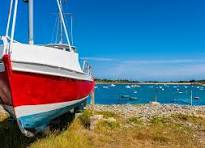

The Channel Islands’ unique history and culture have inspired a wide range of literary works, from historical fiction and war stories to character-driven narratives that explore the islands’ distinct identity. Here is a selection of very different titles I researched.
The Book of Ebenezer Le Page is a novel by Guernsey born writer Gerald Basil Edwards first published in 1981.

It is the fictionalised autobiography of an archetypal Guernsey man, Ebeneezer Le Page, who lives through the dramatic changes in the island of the Guernsey, Channel Islands from the late nineteenth century, through to the 1960s (including the Nazi occupation period). Guernsey is a microcosm of the world as Dublin is to James Joyce and Wessex is to Hardy.
The Vale (on Guernsey)
Much of the Vale parish belonging to the fief Saint Michael, which benefited the Benedictine monks who lived in an abbey that had been built next to the Vale Church from when it was granted in 1032 by Robert of Normandy who had apparently been caught in a storm and his ship had ended up safe in Guernsey. The rights to the fief were removed by Henry VIII when he undertook the Dissolution of the Monasteries.
I was caught by the reference to the location known as The Vale. I knew of this only in the lyrics of the Show of Hands song, harking back to the days of the WWII occupation. It has a haunting melody which sings of a lost wartime romance. SOH are my favourite folk band so I couldn’t resist. You can find it on Spotify.
They came here in ’41,
When I was just a boy,
The Docklands streets they left behind
The bombers then destroyed
All scattered through our valley
In hamlets and in farms
To shelter from the storms of war
Hidden from all harm
Oh, hidden from all harm
That first summer long and warm,
The fighters overhead
A bomb fell on the hillside,
And shook us in our beds,
Flirting with those city girls,
And fighting with it’s sons,
But come the early autumn fall,
We lived and laughed as one,
Oh, we lived and laughed as one.
My father farmed the hillside fields
That shadowed half the Vale
Behind his back we walked alone
And watched the moon set sail
The victory gained, they all returned
I had no cause to doubt
Her promise to return to me
Before the year was out,
Before the year was out.
Season after season fell
With no hand at my door
I fell to sense and reason
Not waiting anymore
Oh, the Sunday hymns we used to sing
I faltered on each verse
And tried to say a prayer for her
It came out like a curse
Oh, it came out like a curse.
When forty years had passed, one day,
My son walked in our lane
A stranger stopped his car and shook his hand
And asked his name
From where I stood, they looked just like
Two brothers face to face,
I walked towards them through the meadows
Where we once embraced,
Oh, where we once embraced.

She was here in ’41,
When I was just a boy.
                        ~~~~~~~
Toilers of the Sea by Victor Hugo.

A novel about the lives of fishermen and sailors in Guernsey, written during Hugo’s exile on the island.
The book is dedicated to the island of Guernsey, where Hugo spent 15 years in exile.
Synopsis : Hugo uses the setting of a small island community to transmute seemingly mundane events into drama of the highest calibre. Les Travailleurs de la Mer is set just after the Napoleonic Wars and deals with the impact of the Industrial Revolution upon the island.
The story concerns a Guernseyman named Gilliatt, a social outcast who falls in love with Deruchette, the niece of a local shipowner, Mess Lethierry. When Lethierry’s ship is wrecked on the double Douvres, a perilous reef, Deruchette promises to marry whoever can salvage the ship’s steam engine. (The cliff of the double Douvres is not the same as the well-known and also dangerous Roches Douvres, which today has a lighthouse – Hugo himself draws attention to this in the work.) Gilliatt eagerly volunteers, and the story follows his physical trials and tribulations (which include a battle with an octopus), as well as the undeserved disgrace/shame/dishonour of his neighbours.
Victor Hugo’s Les Misérables: Though not solely set in the Channel Islands, Hugo wrote much of Les Misérables while living in Guernsey.
Mr. Pye by Mervyn Peake: A satirical novel set in Sark, one of the Channel Islands.
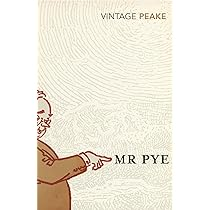
Mr Pye is a 1953 novel by English novelist Mervyn Peake. Mr. Pye travels to the Channel Island of Sark to awaken a love of God in all the islanders.
His landlady on the island, Miss Dredger, quickly becomes a devout follower of his teachings, and even agrees to allow the person she hates the most, Miss George, to stay in her house. As Pye does good works, he gradually feels a stinging feeling on his back. On further investigation, he discovers that he has started to grow angel’s wings, and after consulting with a Harley Street doctor, he concludes that the best thing to do is to stop doing good deeds, and instead does bad deeds.
He engages in some deliberately malicious acts, and after a time this results in him growing horns on his forehead. He is unable to decide what to do, but eventually decides to reveal his horned condition to the islanders, who chase him to the edge of a cliff, from which he flies, using his wings.
The Girl from the Channel Islands by Jenny Lecoat:
A novel based on a true story of a young woman who works as a translator for the German occupiers in Jersey.
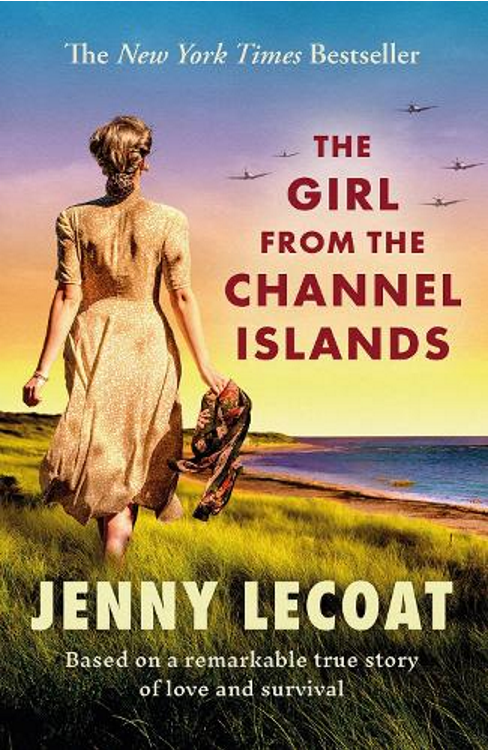
A Jewish woman falls in love with a German soldier amid the Nazi occupation of Jersey. In her debut novel, The Girl from the Channel Islands, author Jenny Lecoat skillfully weaves the hardship of war, the power of resistance, and the strength of forbidden love into an intimate story of survival.
Menagerie Manor by Gerald Durrell
Menagerie Manor by the naturalist Gerald Durrell (1964), a memoir of his quest to establish a zoo on the island (you can still visit the zoo today).
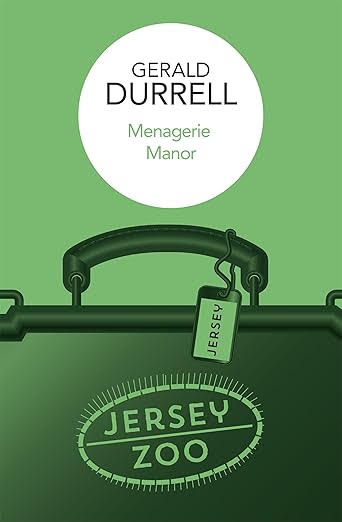
Menagerie Manor is the hugely entertaining account of how the much-loved conservationist and author Gerald Durrell fulfilled his lifelong ambition by founding his own private sanctuary for endangered species in Jersey with the help of his wife, a selfless staff and a reluctant bank manager. With a foreword by Lee Durrell, Honorary Director of the Durrell Wildlife Conservation Trust, this book about the trials and wonders of living in the middle of a zoo is a classic that will continue to bring pleasure to those who grew up reading Durrell, and deserves a whole new readership.
A Doctor’s Occupation by John Lewis is a firsthand account of a doctor’s life in Jersey during the German occupation.

However, despite the awfulness of the time, Dr Lewis infuses his account of it with an irrepressible joie de vivre which is utterly delightful. It is an uplifting story of winning against the odds, by turns hysterically funny and then unbearably sad.
Above all it has an immediacy which takes the reader right into the heart of the Occupation, you can smell the fear, feel the pain, suffer the loss, sense the victory as do the characters in this history and they are many and varied. You will meet the good Jersey folk like the brave and tragic Mrs Gould from St Ouens and the not so good Jersey folk in the shape of the collaborators and informers or the “Jerry bags” like the exotic Ginger Lou. Here too you will meet some of the most wretched victims of the war, the Russian Todt workers who were hidden and helped by the locals and of course the many sorts of Germans who made up the occupying force. It is a story of compelling interest. I had the good fortune to meet John Lewis and his wife in 1991 at his lovely Jersey home. He talked for hours that seemed like minutes of his life during the war years. He was just as I’d hoped he would be – endlessly kind, witty and understanding. I came away from that meeting feeling happy, elated and much wiser, as you will surely do after reading of the Doctor’s Occupation. John Nettles
I hope you are inspired to read one of the books.