

Castles
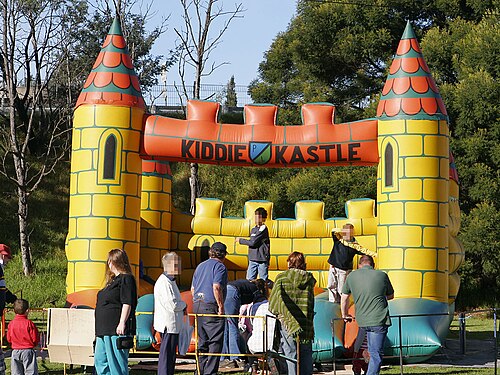
A big subject, but bouncy castles and these
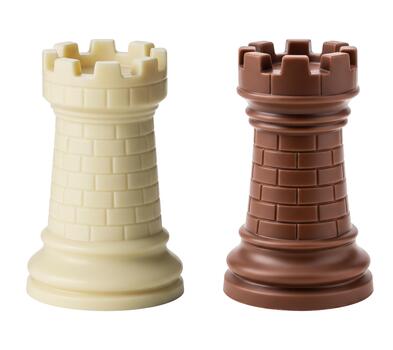
are some of the many types we didn’t cover at our recent meeting.
The Latin word for castle is castellum, which refers to a fort, fortress, or fortified settlement and these castles as we know them today were introduced into England during the Norman Conquest. The first ones, with their timber towers, were quick and cheap to build, and it’s estimated that approximately 500 of this type were built in the Conquerer’s reign. However, they were vulnerable to attack by fire, therefore King William ordered the building of stone castles in strategic positions that were easier to defend. At least 85 castles were built of stone by 1087, many of them occupied by wealthy nobles.
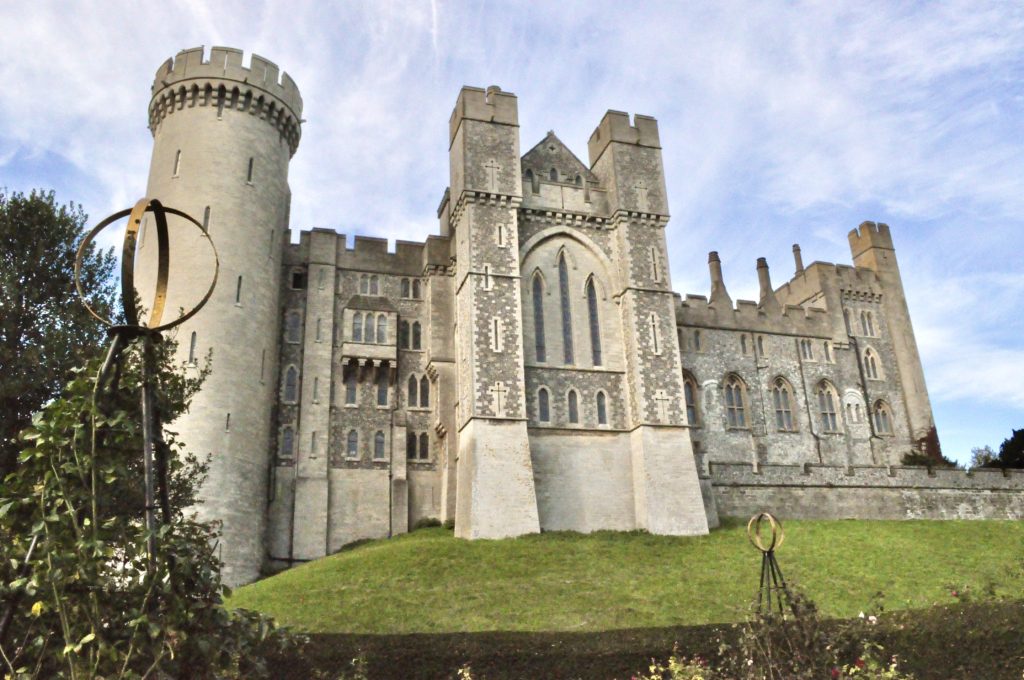
We are lucky in Horsham to have several notable nearby castles, one of them being situated in the lovely market town of Arundel, only 24 miles away. Originally built in the 11th C, the castle is the historic home of the Dukes of Norfolk, having been occupied by their line for over 850 years. It is home to an impressive art collection including works by Van Dyck, Gainsborough and Canaletto. Queen Victoria stayed at Arundel Castle and remarked on its beauty. In springtime it is renowned for its astonishing display of tulips.
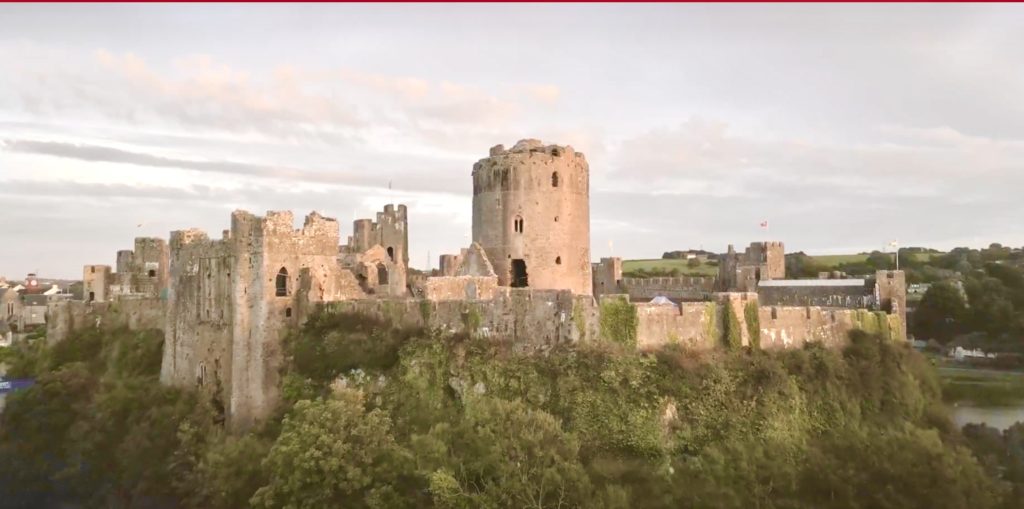
Wales has the highest concentration of castles per square mile in Europe. While many are now in ruins, over 100 are still standing or well-preserved, Pembroke Castle being one of the finest. Originally built in 1093 as a motte and bailey castle, it was reconstructed in stone in the late 12th-early 13th C, the first Tudor king, Henry VII being born here in 1457. During the English Civil War the castle was attacked in turn by both Royalist and by Roundheads as the sympathies of its occupants altered. In the latter stages of the struggle an attacking force was led by Cromwell himself. Under Cromwell’s orders charges of gunpowder were placed in each of the towers forming the south front, causing much damage. The castle remained an abandoned ruin until land owner, Sir Ivor Phillips restored it to its former glory. One of its most outstanding features today is its 12th C massive round keep with an unusual stone dome and views over the surrounding countryside and Milford Haven. There are endless passages, tunnels and winding staircases to explore as well as the gatehouses and the impressive Great Hall with its exhibition of Medieval life.
We learned about an interesting restoration programme taking place in France. Guédelon is a 13th C style castle which is being built as much as possible with the equipment, materials and methods that would have been used at the time. In 1979 Michael Guyot bought the ruins of bbCastle in Burgundy and in 1995 he had the idea of rebuilding it. Work began two years later with a 26 year plan to recreate the castle. Visitors pay an entrance fee that funds the project which is monitored by historians, craftspeople and archaeologists and which progresses year on year. The team of workers will take a lot longer than their medieval counterparts took to complete the work as they down tools during the winter season and there are a lot less people on site. Also, they are having to learn a lot of almost-forgotten techniques. As of 2025 it was estimated that there would be 8-10 more years of building work needed to complete the project.
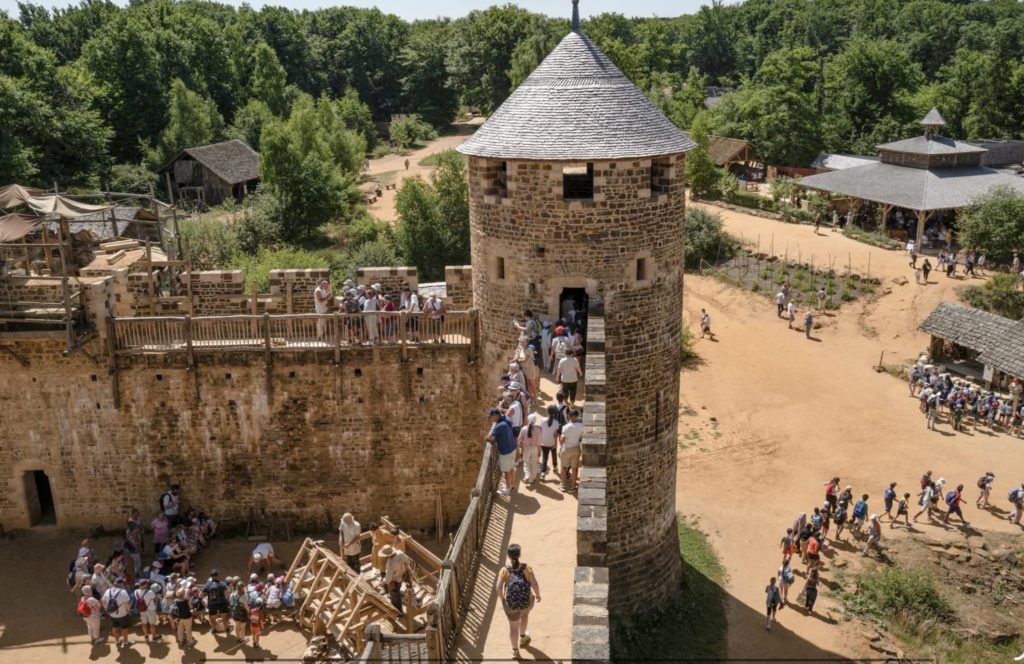
On the South East coast of England Henry VIII built Walmer Castle (1539-1540), an artillery fort to protect against invasion from France and the Holy Roman Empire. At the same time he built Deal Castle and Sandown Castle, thus forming a 2.7 barrier to protect the coast at a total cost of £27,092! They were all built to the same plan comprising a keep and four circular bastions for the cannons. From the air they resemble the Tudor Rose. During the English Civil Wars, Walmer came under siege from Parliamentarian forces.
For nearly three centuries, Walmer has been the official residence of the Lord Warden of the Cinque Ports, an office granted to some of Britain’s most famous people, including the Duke of Wellington (who died here) and Queen Elizabeth the Queen Mother. The elegant residence and award winning gardens are open to the public.
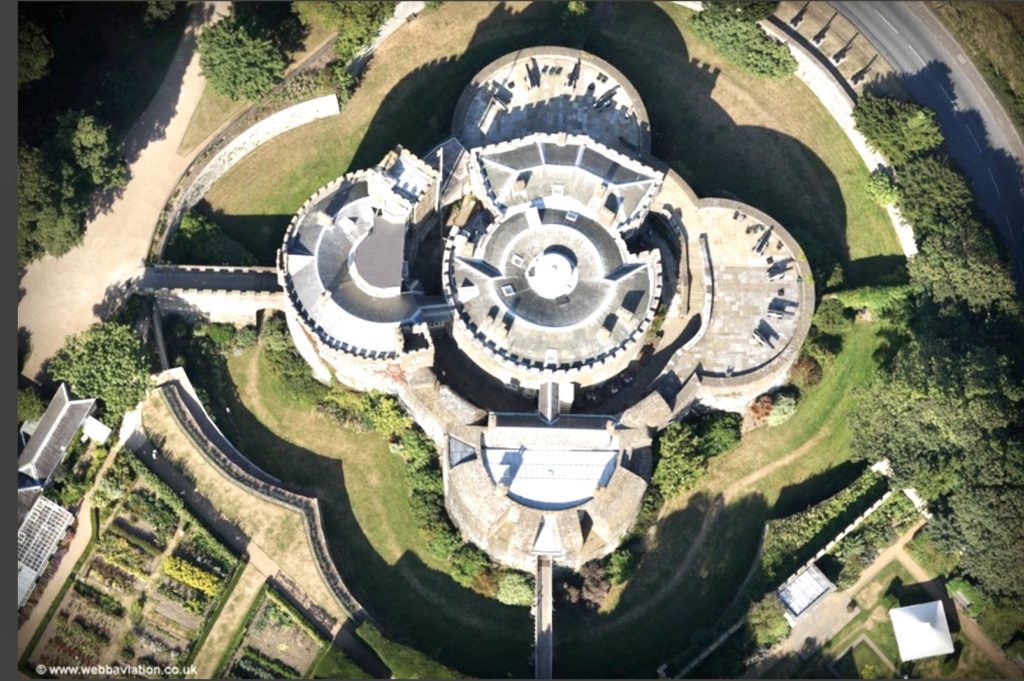
Deal Castle, now under the guardianship of English Heritage. is also open to visitors to walk the battlements and walk the Rounds, (the twisting dark passageways along the outside of the outer bastions, linking gun positions covering the base of the moat).
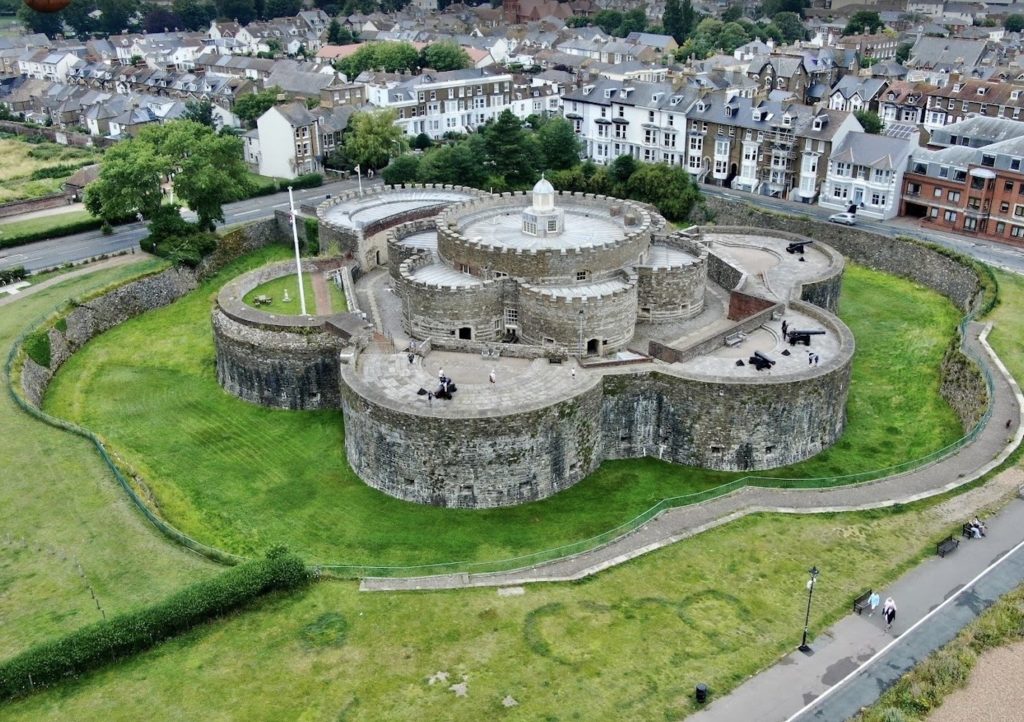
By the 19th C Sandown Castle was suffering badly from the effects of coastal erosion but remained in military use until 1863. Between 1882 and 1893 the upper levels were demolished with explosives. The remains of Sandown were purchased by the town of Deal for £35 to form part of the local sea defences. The remaining masonry was encased in concrete in the late 1980s to form a sea wall.

When is a castle not a castle?
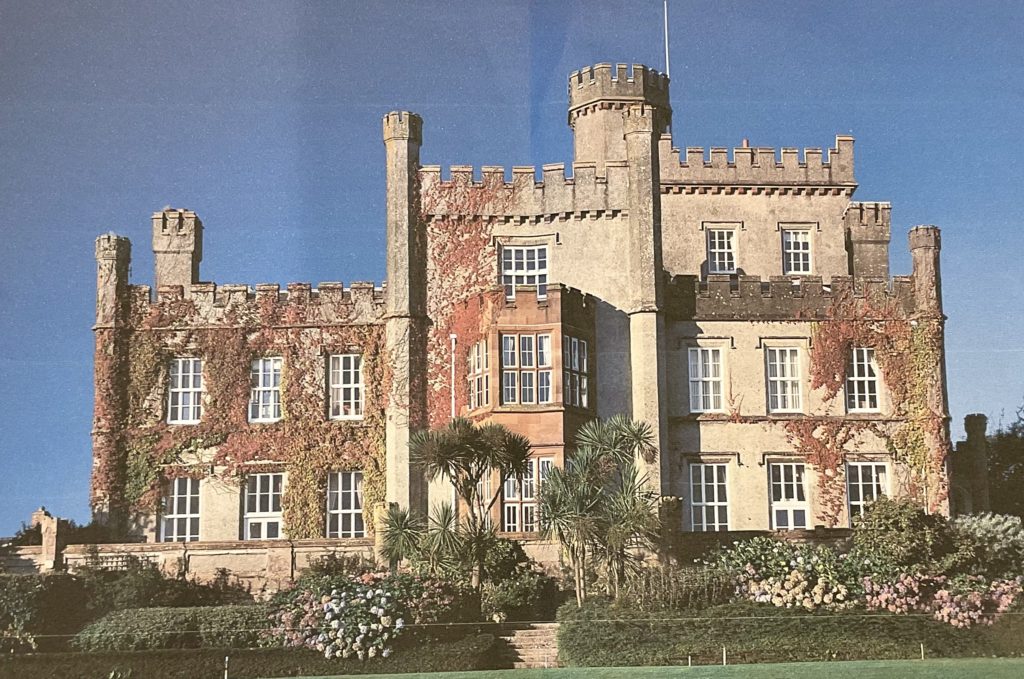
St Brides Castle, set in 99 acres of mature parkland on the Pembrokeshire peninsula, is a fine 19th-century baronial country mansion re-styled in 1833 at the whim of the fourth Lord Kensington. As a result, its castellated outline reflects the eccentricity common among the wealthy landowners of the time. In 1923 it became a sanatorium part of Kensington Hospital and then in 1992 it was converted to holiday apartments. After extensive renovation, the current owners are Holiday Property Bond.
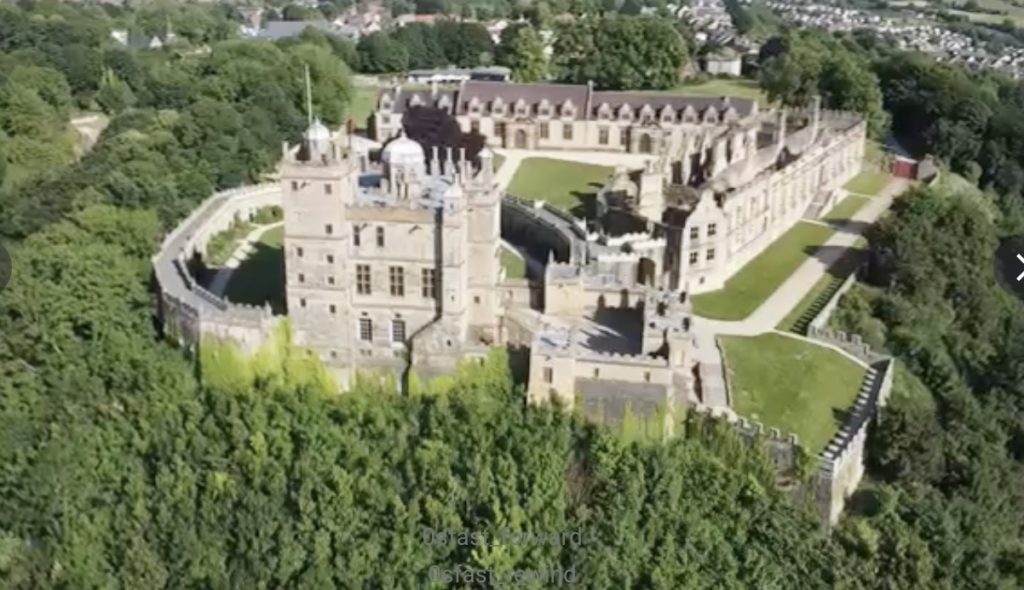
Bolsover castle was founded in the late 11th century by William Peveril, one of William the Conqueror’s knights, but it was neglected from the mid-14th century. Its ruins provided the setting for the ‘Little Castle’ begun in 1612 by Sir Charles Cavendish as an artistocratic retreat. It is perched on a ridge over the Vale of Scarsdale. The interior has exceptionally well-preserved and beautifully restored interiors with exquisitely carved fireplaces and richly coloured murals and panelling. Charles I and Queen Henrietta Maria visited in 1634. The entertainment Love’s Welcome, a masque specially written for the occasion by Ben Jonson, was performed in the Fountain Garden. Sadly the castle suffered in the late 1800sg from the effects of mining subsidence and pollution. In 1946 it was given to the Ministry of Works, who stabilised and repaired the buildings. Today it is in the care of English Heritage.
We discussed some UK place names containing the word ‘castle’ and some less-than-well-known facts about them :
Newcastle-upon-Tyne
The Lantern Tower of Newcastle Cathedral (Cathedral Church of St. Nicholas) was built in 1448 and famously acted as an “inshore lighthouse” for ships navigating the River Tyne. This iconic beacon stood as the highest point in the city for centuries.
Newcastle-under-Lyme
Named after the castle that was erected near Lyme (meaning Elm in OE) Forest in 1145
Castle Hedingham Essex
The castle has the best preserved Norman keep in England and the largest unsupported single span Norman arch.
Castle Douglas Dumfries and Galloway never had a castle
Sir William Douglas founded the town in 1792 on the site of the former village of Carlingwark after buying the land for £14,000. He modelled the gird iron street layout on Edinburgh’s New Town.
Castle Donington Leics castle demolished in 1595
Newcomers to the town are commonly addressed as East Winders, a reference to the early Viking invaders being blown down the river by the east wind.
Castle Cary Somerset castle abandoned in 12C
The Roundhouse built in 1779 as a lock up.
Castle Combe Wilts castle abandoned by 14thC only earthworks remain
Often called the prettiest village in England. No new houses have been built in the village centre since around 1600
Castleford West Yorks no definitive evidence of a medieval stone castle but there was Roman fort constructed around 71-74 AD
Known as Lagentium (meaning place of swordsmen) in Roman times
Perhaps you can think of some ‘Castle’ place names that we missed.