

What an interesting and varied meeting we had on the subject of ‘Green’ last night. We heard first-hand of the experience of one of our members who lives in an environmentally friendly ie ‘green’ house that she and her husband built four years ago. With its heat recovery system, super insulation, solar panels, efficient triple glazing and minimal thermal bridges, the house is able to create more energy than required to heat and operate the building, so saving money by selling electricity back to the National Grid.

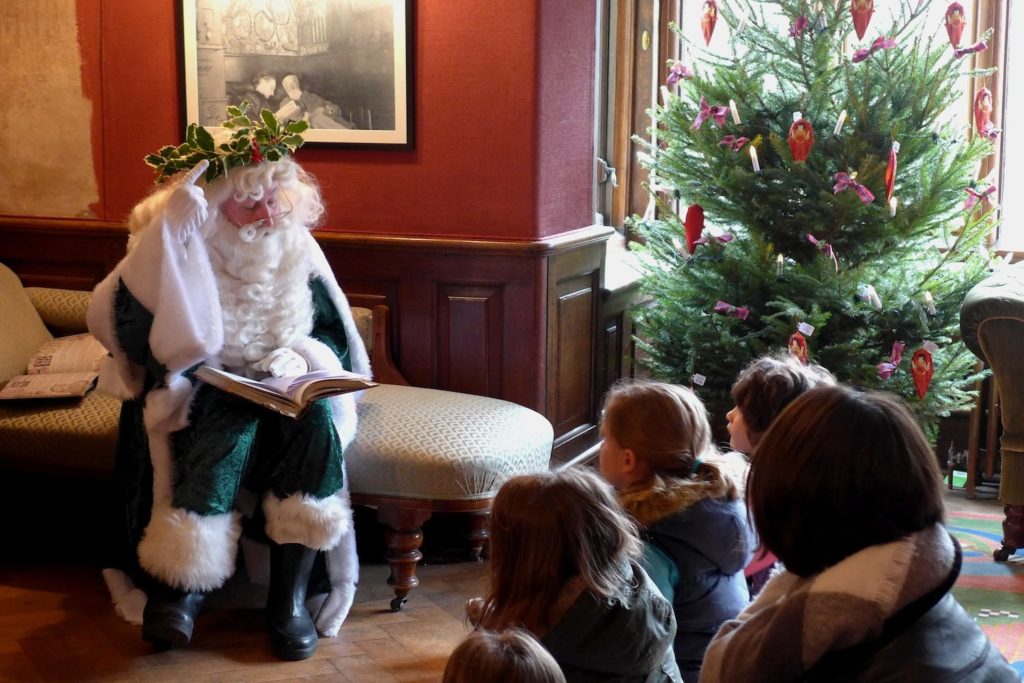
Father Christmas was originally depicted in green robes decorated with holly and mistletoe to represent evergreen trees and the ancient pagan spirit of winter, the Green Man, who brought cheer and hope during the bleakest months. He changed colour late in the 19th century when cartoonist, Thomas Nast, depicted him in various colours before settling finally on red. In 1931, Coca Cola used the red-clothed Santa (believed to be derived from the red bishop’s robes of Saint Nicholas) in advertising, and that is how he has been known to us ever since.
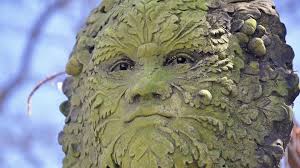
The Green Man (mentioned above) with a foliate head, was a motif in architecture of both secular and ecclesiastical buildings particularly of the early 12th century and later Gothic architecture of the 13th and 14th centuries. It is interpreted as a symbol of rebirth, representing the cycle of new growth that occurs every spring. It is found in many cultures around the world and is often related to natural vegetation deities.
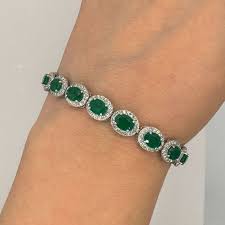
Emeralds are precious green gemstones, a variety of the mineral beryl, known for their vibrant colour caused by trace amounts of chromium or vanadium. Emeralds in antiquity were mined in ancient Egypt from 1800 BC ((Cleopatra was a big fan) but those mines were exploited on an industrial scale by the Roman and Byzantine Empires, and later by Islamic conquerors. Nowadays, Columbia is by far the world’s biggest producers of emeralds, Zambia taking second place., but they are, surprisingly, to be found all over the world.
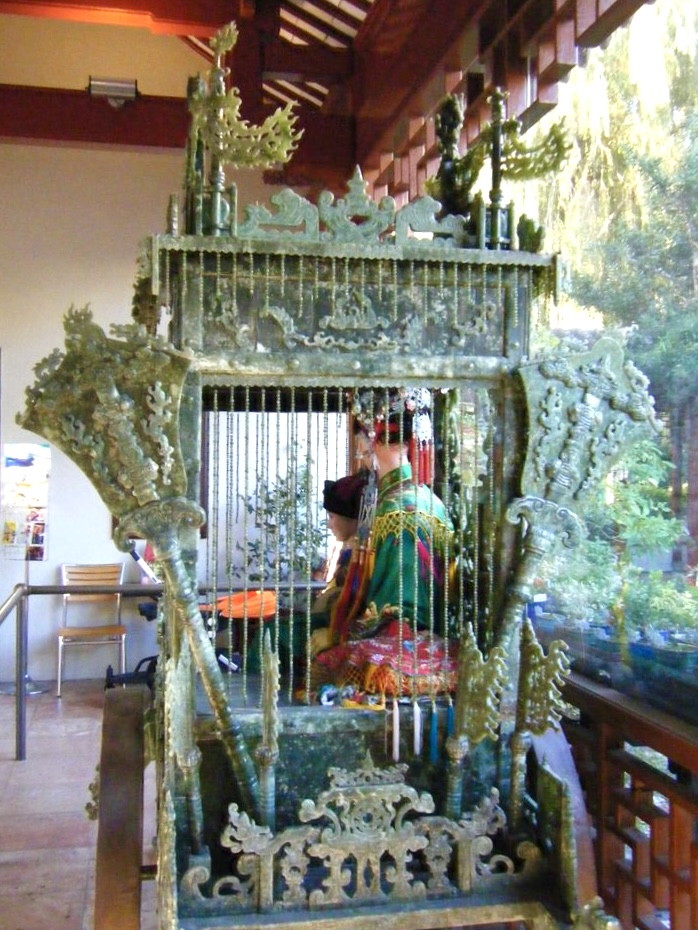
Jade is another type of decorative rock used for jewelry or ornaments. Jade is classified into three main types: Type A, Type B, and Type C. Type A jade refers to natural, untreated jadeite jade, prized for its purity and vibrant colours. It is the most valuable and sought-after type, a symbol of wealth and power and it is often characterized by its vivid green hues and high translucency. Type A jade is revered for its symbolism of purity, harmony, and protection in various cultures, especially in East Asia where it holds significant cultural and spiritual importance. Types B and C have been enhanced with resin and colourant respectively.
We listened to Joni Mitchel singing Little Green, a beautiful and moving song written in 1966, shortly after she had signed the papers to place her daughter for adoption the previous year in the hopes that the child would enjoy a better, safer, and more stable life than the struggling artist could provide at the time. The vivid shade of Kelly green, after which Mitchell named her daughter, personified this deeply rooted optimism. “Call her green and the winters cannot fade her..” The existence of her daughter, was not publicly known until 1993, when a roommate from Mitchell’s art school days in the 1960s sold the story of the adoption to a tabloid magazine, so at the time of the song’s release, no one was aware of the true meaning of the lyrics. Listen here. Little Green
Green is the 19th most prolific surname in the UK and 37th in America. The name is found in many medieval manuscripts though sometimes spelt Grene. One member told us of famous people with the surname Green eg, Robson Green actor, Hughie Green TV compere, Peter Green (founder of Fleetwood Mac), Graham Greene author.
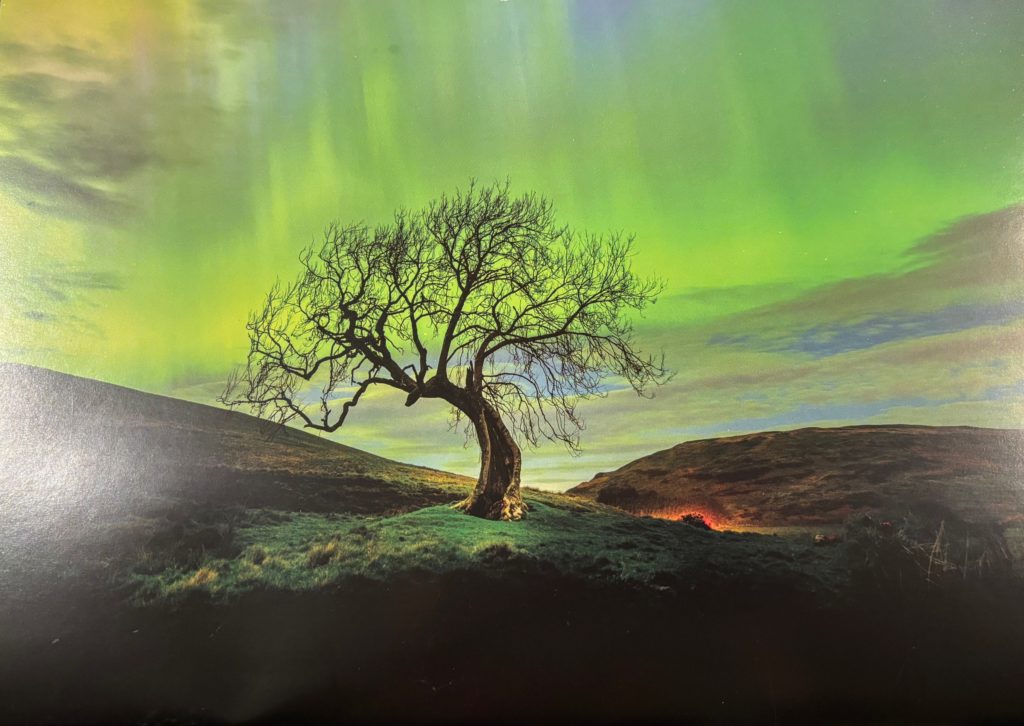
The Northern Lights in the night skies are caused by charged particles from the sun colliding with gases in the Earth’s atmosphere. The colours vary based on the gas being lit, green and pink from oxygen.
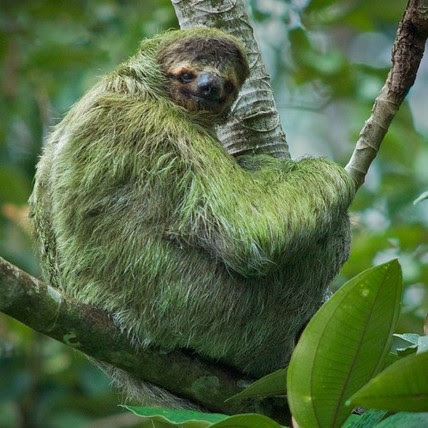
Possibly the most intriguing fact we learned during the evening concerned sloths. The shaggy coat of the animal has grooved hair that is host to symbiotic green algae which camouflage the animal in the trees and provide it nutrients. The algae also nourish sloth moths, some species of which exist solely on sloths because of the algae. Sloth fur is a small ecosystem of its own, also hosting beetles, mosquitoes and lice.
Many people consider green to be unlucky. I wonder if this is because of the arsenic contained in Carl Scheele’s green pigment invented in 1775 and used in fashionable green bedroom wallpaper for the next 125 years! It’s thought that this might have been the cause of Napoleon’s death. There are many interesting facts surrounding the colour green, too many to detail here, but if you have a green thumb perhaps you’d like to make your own green dye, by mixing matcha, foxglove, Queen Anne’s Lace, black-eyed Susan, artichoke, grass and Lily-of-the-valley. Then, let us know if it works!
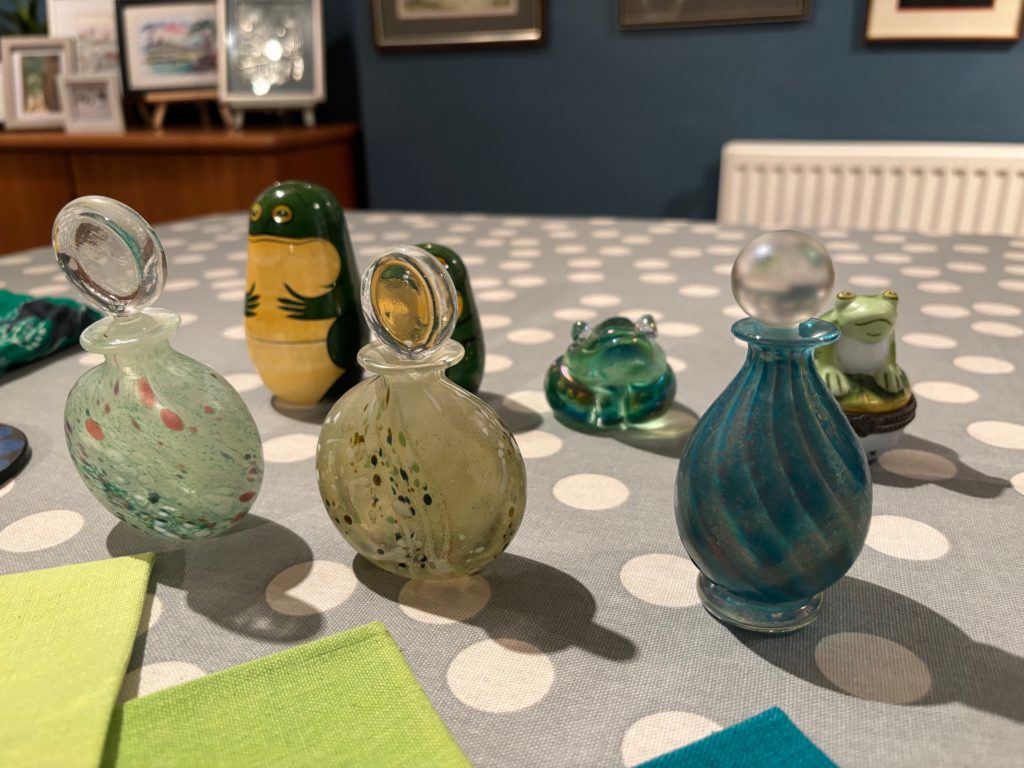
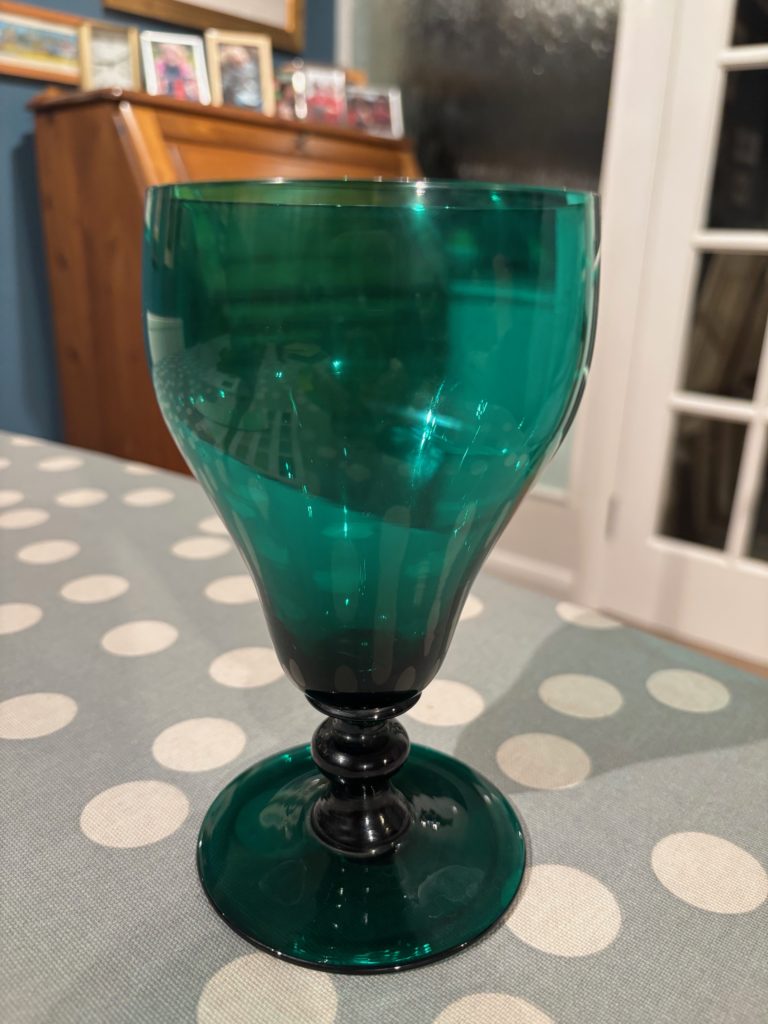
We were able to have a close look at various green items such as a vivid blue-green Bristol glass which a member had had in her possession for at least 50 years and which had been bought from an antique shop.
Our host told us many idioms for green and the colour’s connection with Irish identity , rebellion against British rule and superstition. She also made an eye-catching display of green items to create the appropriate atmosphere including glass ornaments, green paint charts, tablecloth and pictures etc.