


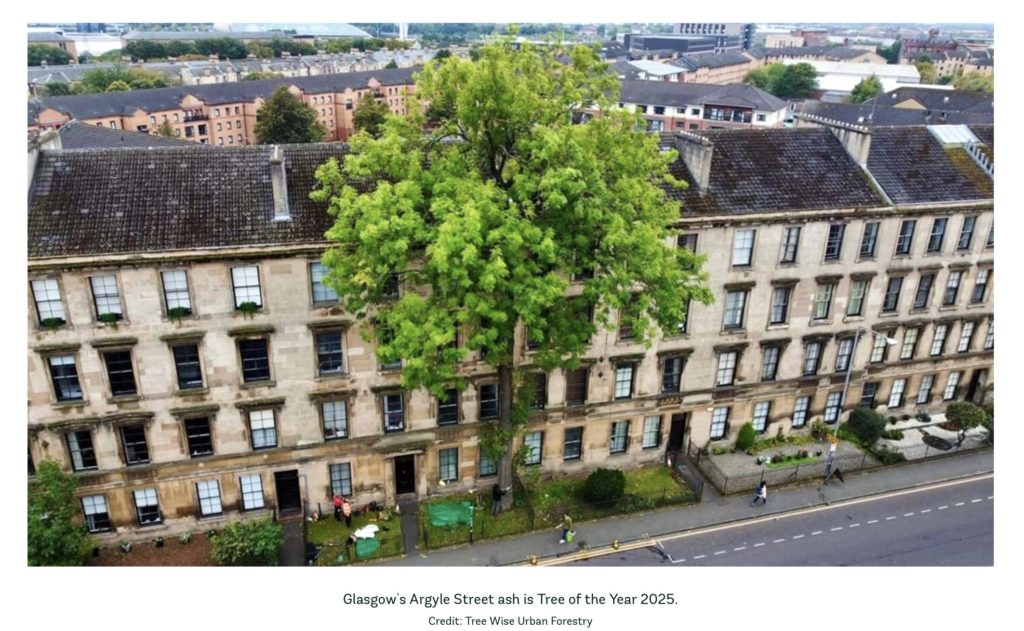
We chose a good day for our meeting on Trees as it was the same day that The Woodland Trust announced the winner of the UK Tree of the Year 2025 – the Argylle Street ash in Glasgow, the only urban tree to be shortlisted.
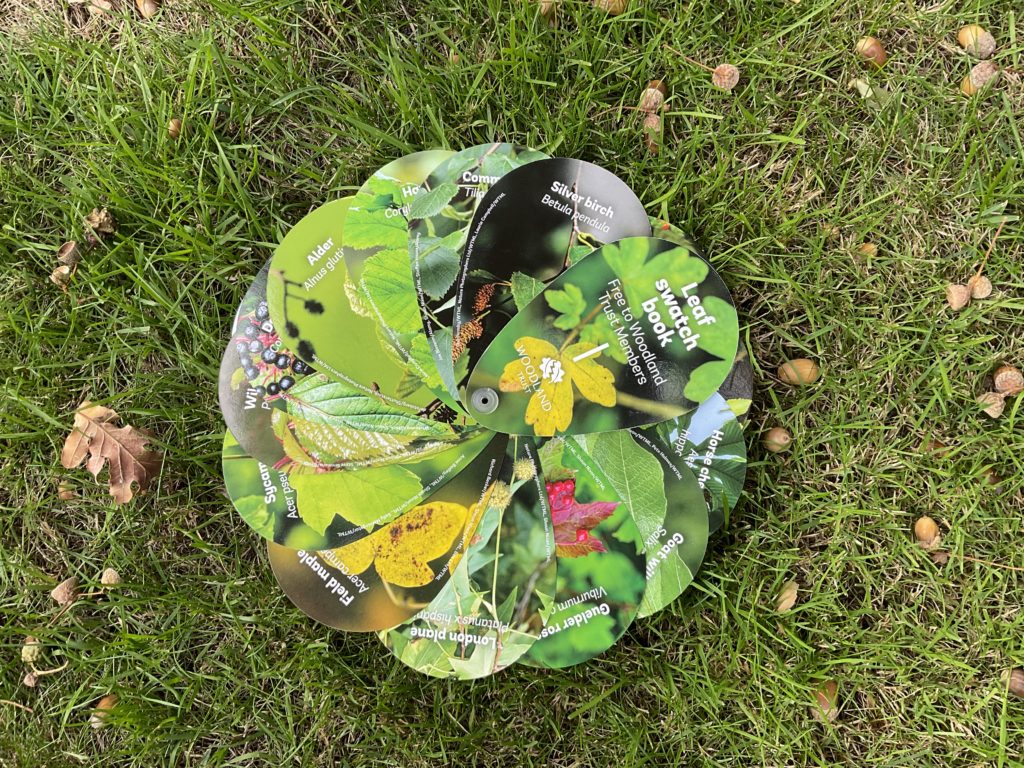
The Woodland Trust protects over 1000 woods and individual trees, restores ancient damaged woods, and creates new woods by planting native trees.
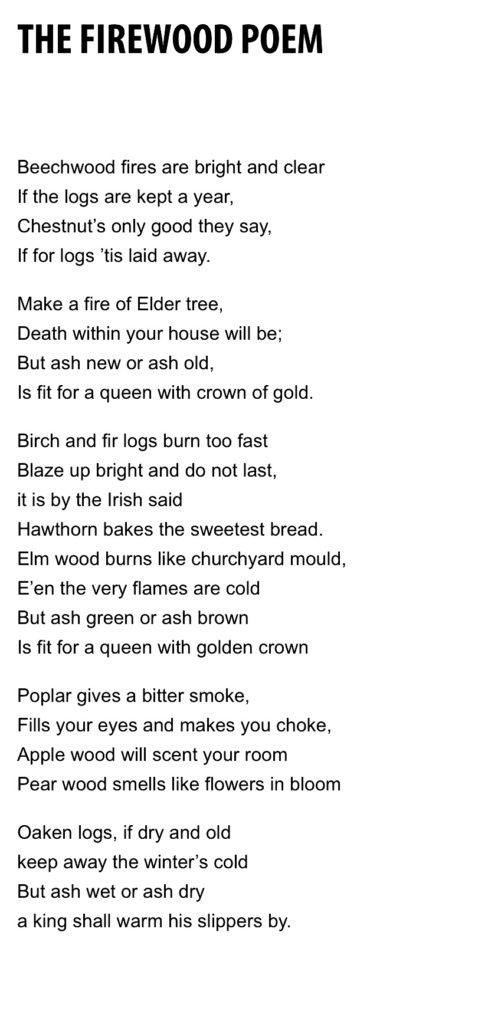
The Firewood Poem reminded some of us of Girl Guides whose practical outdoor skills such as fire lighting with a single match, made it important to know which woods burned best.
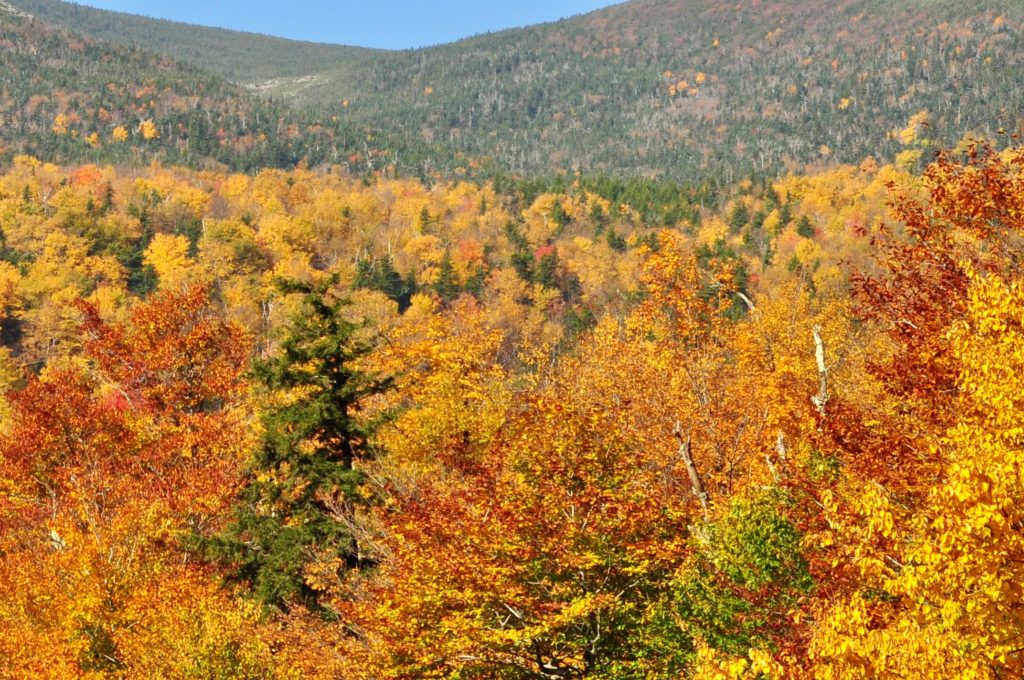
We talked about the variety of trees on the eastern side of the USA which makes New England in the autumn world-renowned for its spectacular, vibrant foliage, drawing tourists (aka leaf-peepers), to the region.
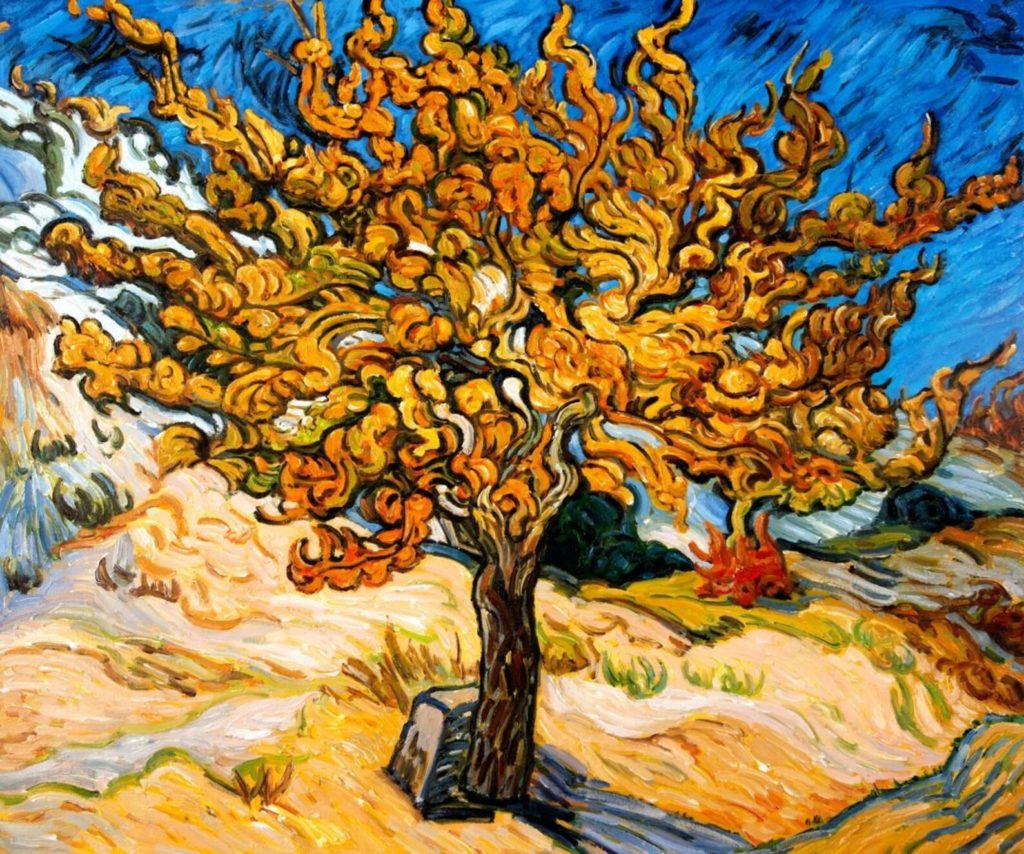
Van Gogh’s painting of the Mulberry Tree with its flaming foliage was richly painted whilst he was a patient in the mental asylum at St Rémy de Provence. It was interesting to hear that James I and mulberry trees are linked because he ordered ten thousand of them, primarily to start an English silk industry by feeding silkworms. Unfortunately, the plan failed as he ordered black mulberry. Silkworms only eat the leaves of white mulberry!
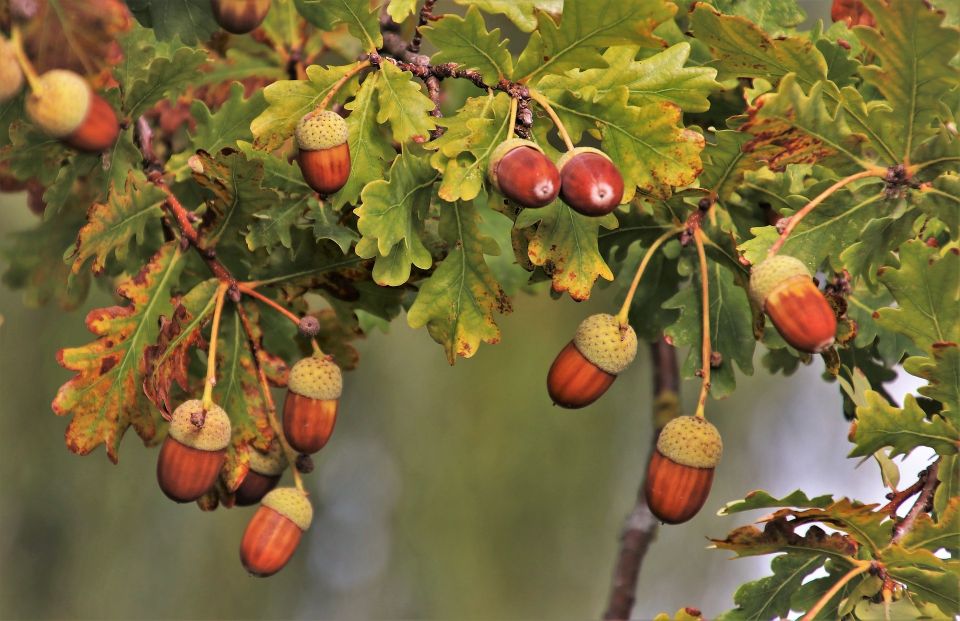
Did you know that 2025 is a mast year? A mast year is when trees and shrubs produce a glut of “mast” – their fruits and nuts, like acorns and beech nuts. This bumper crop, occurring roughly every five to ten years, allows wildlife such as squirrels to hoard food and ensures that enough seeds survive to grow into new trees. In non mast years there is not enough food to support the increased population of squirrels and the like, leading to a crash in numbers keeping the population in check.
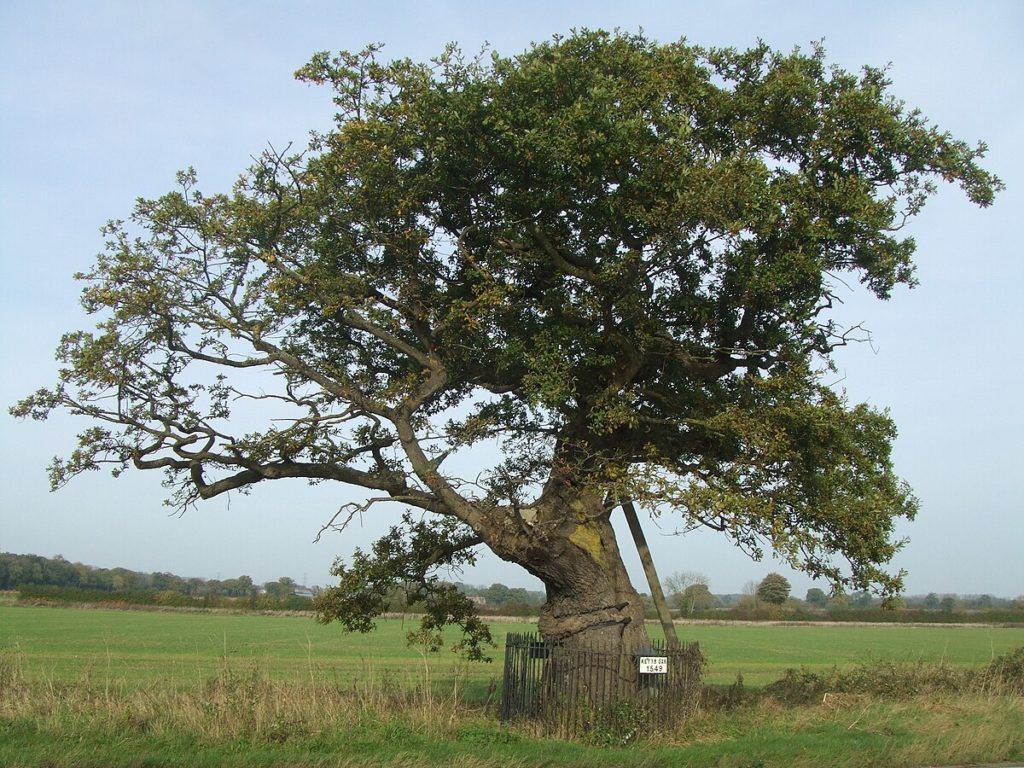
Kett’s oak on the B1172 just outside Wymondham, Norfolk, is a symbol of revolution.
Robert Kett a 57 year old tanner and substantial landowner supported by his brother William, led an uprising in July 1549. A mob of peasant small holders assembled under the oak tree on the common demanding an end to the enclosure of common land by the gentry. Robert Kett made a rousing speech under the oak and the mob marched off to Norwich gathering strength as it went. Soon Kett’s army numbered around 20,000. They captured Norwich castle and managed to hold the city for 6 weeks until their food and reinforcements ran out and they were overcome by government forces. The Ketts were hanged for treason and the tree became a place of pilgrimage for radicals.John Evelyn the diarist wrote about it disparagingly in 1664 in his book Silva. A Discourse of Forest Trees. Both Ketts were the 12 x great uncles of the husband of one of our members.
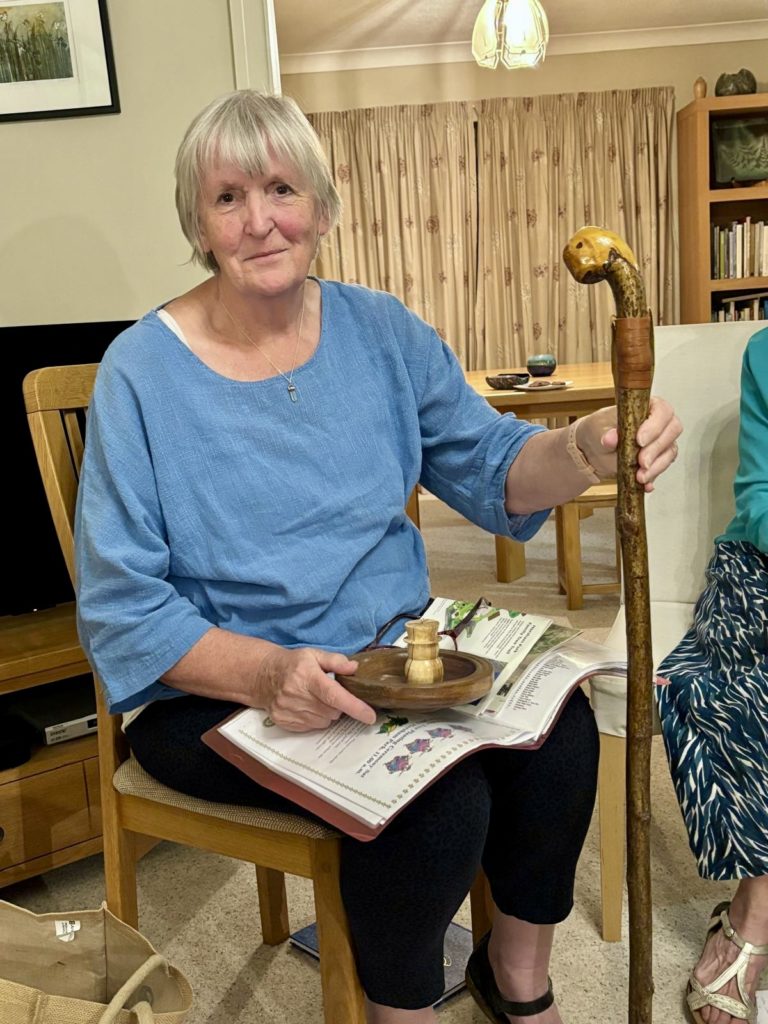
One of our members brought her shillelagh, a wooden walking stick which can also be used as a club or cudgel. This particular one is made from hazel with a large knob at the top.
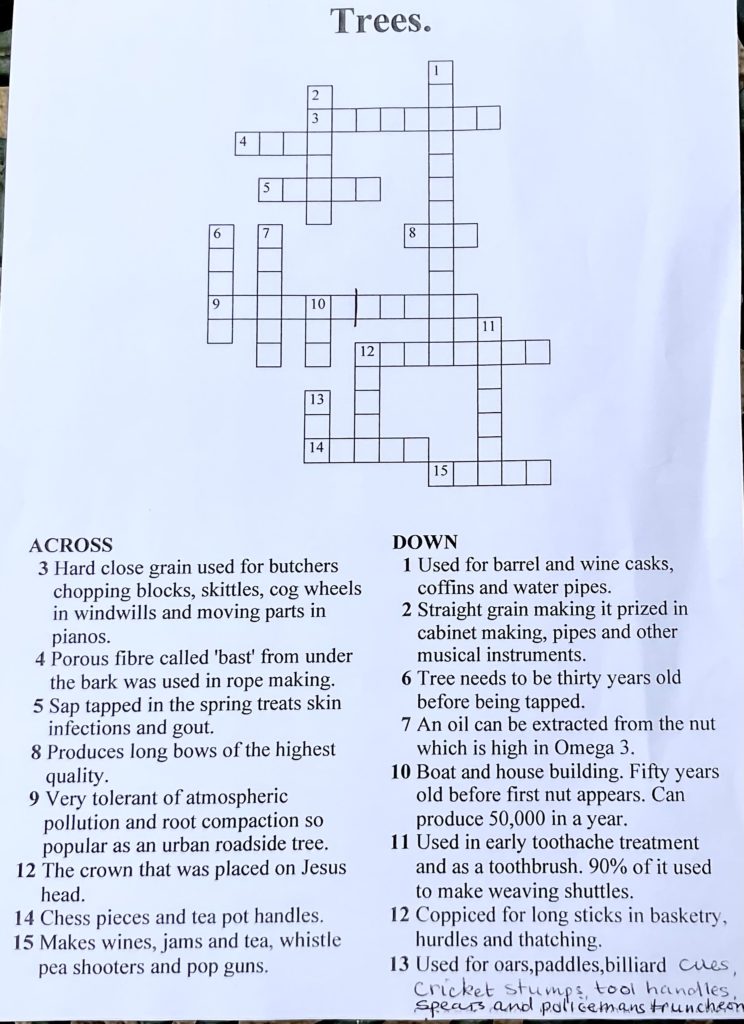
We learned about the many uses of wood for the making of particular items. See if you can solve the freeform crossword below. Some of us struggled more than others!
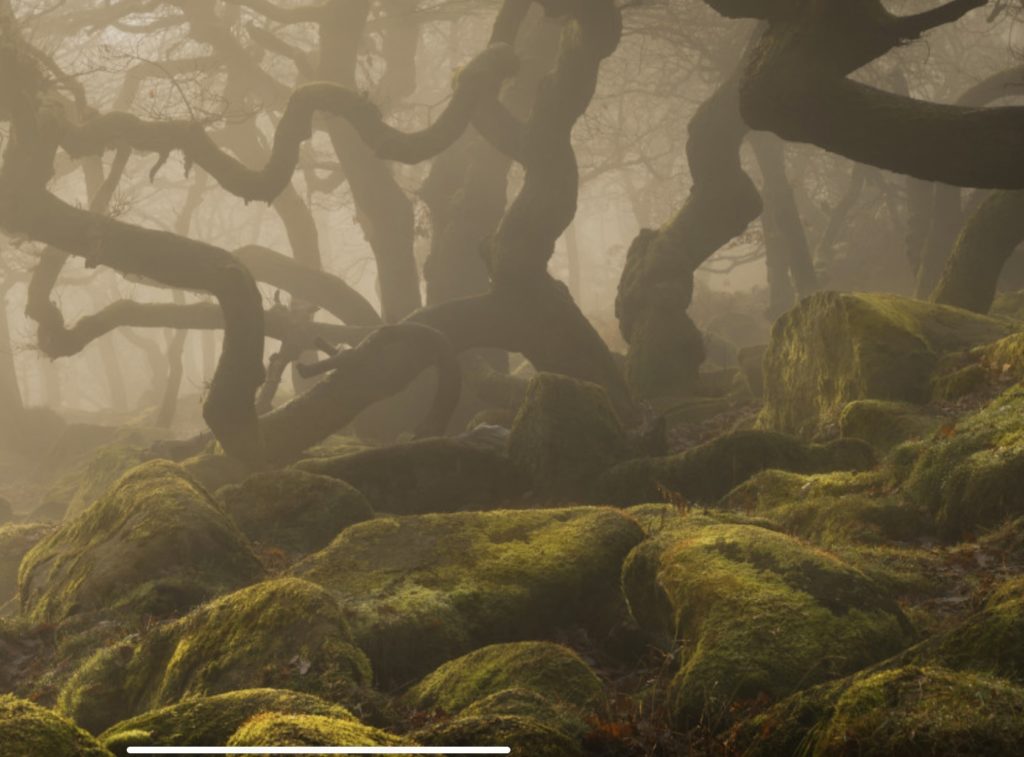
The underwater forest in Alabama is a 60,000-year-old bald cypress forest, once on land, that was submerged off the coast of Alabama by rising sea levels during the last Ice Age. Exposed by major hurricanes like Ivan in 2004, the ancient forest is preserved by a protective layer of sediment and oxygen-poor conditions, creating a uniquely rich marine habitat.
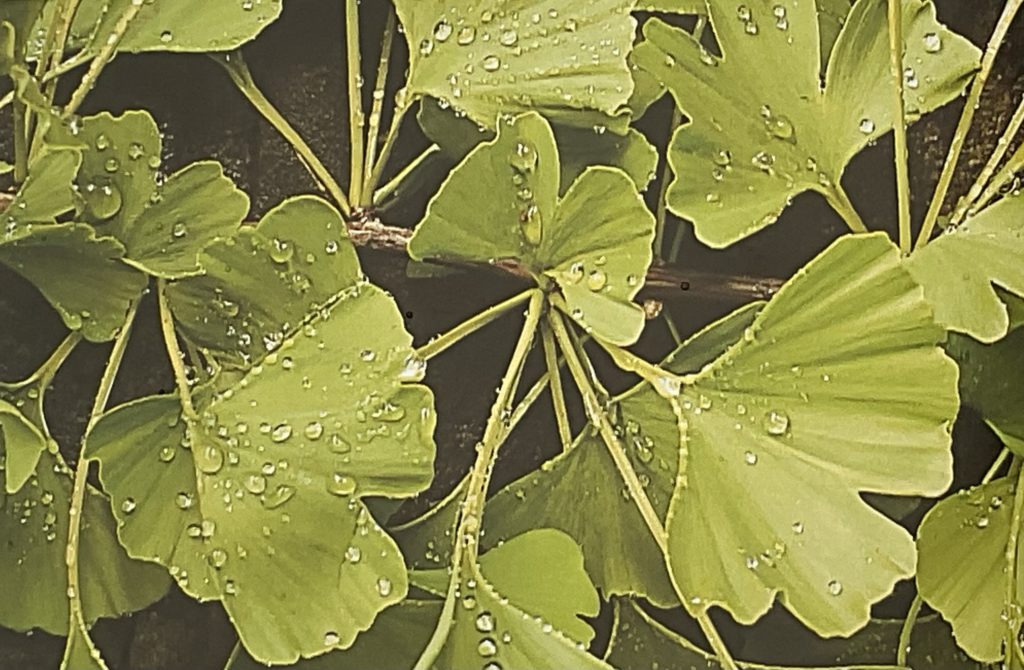
Ginko biloba took form before the first pterodactyls ie at least 150 m years ago. It has the unique honour of being one species, one genus, one family and one order.
The leaf has no rib bisecting it as there were no other trees when the Ginko was making its way into the world, only ferns. It evolved long before any leaf-eating insect existed, so it is impervious to the insects that mutilate the leaves of other trees.
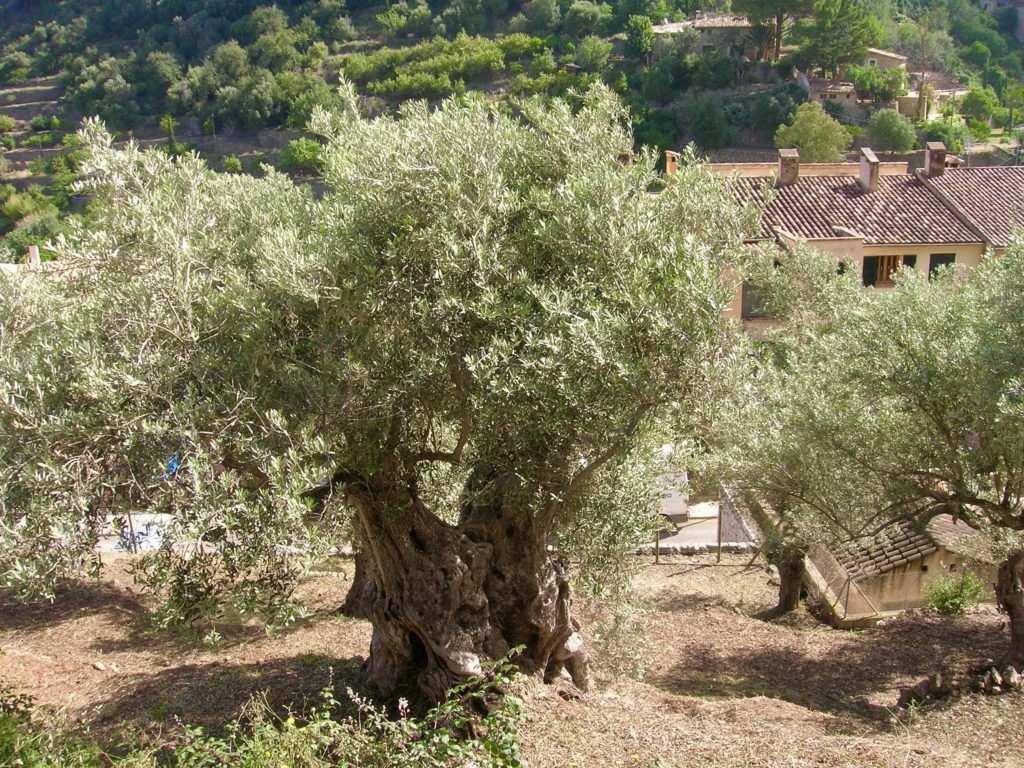
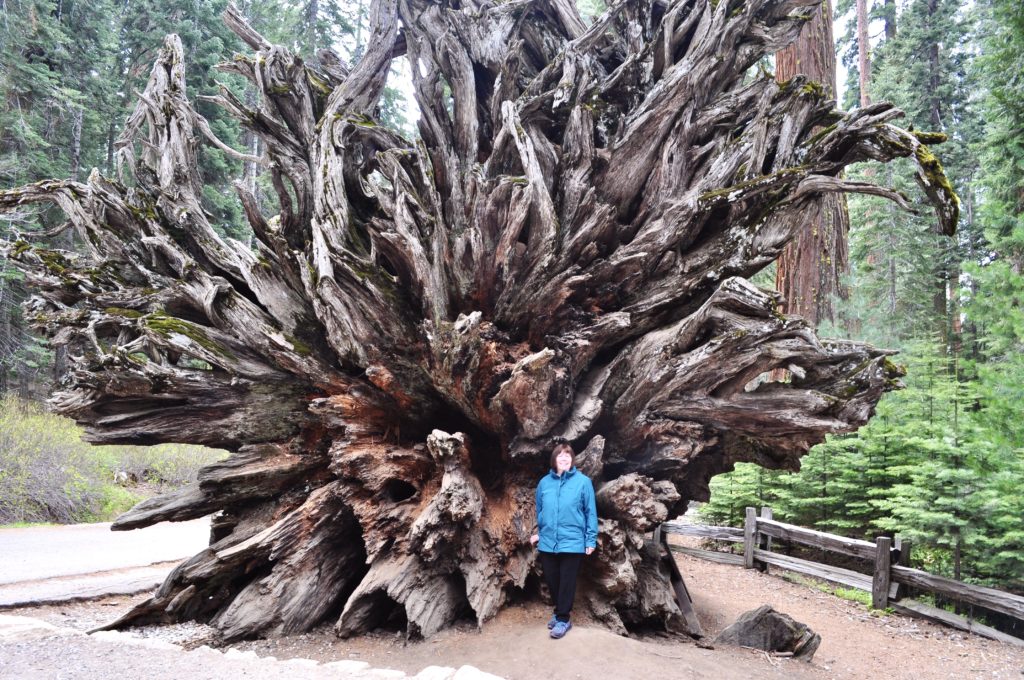
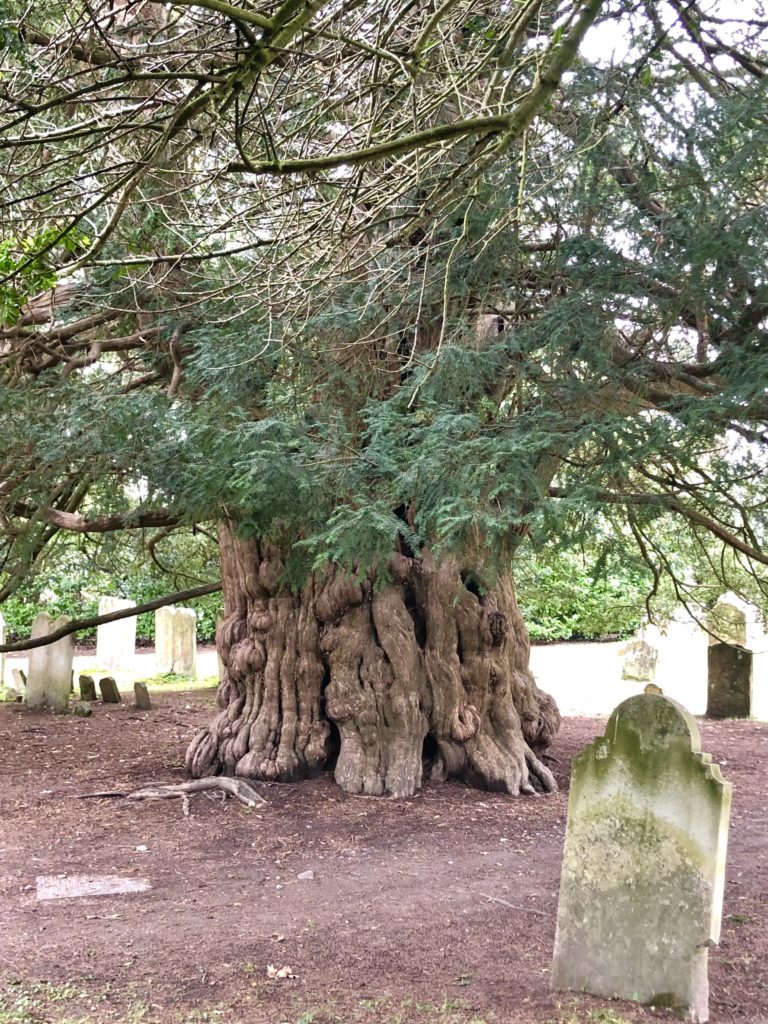
Other trees discussed were olive (among the oldest fruit trees domesticated by humans), sequoia (the largest trees on earth) and the slow growing, long living yew, to be found in churchyards all around the British Isles.
This was a huge subject to cover in one evening so perhaps a follow up meeting will be on the cards some time in the future.