

………..and one or two churches
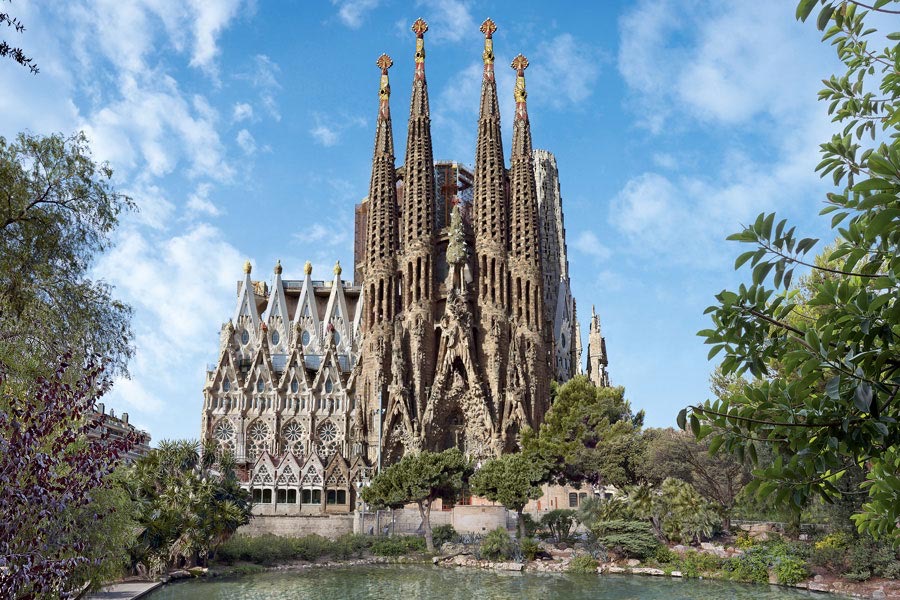
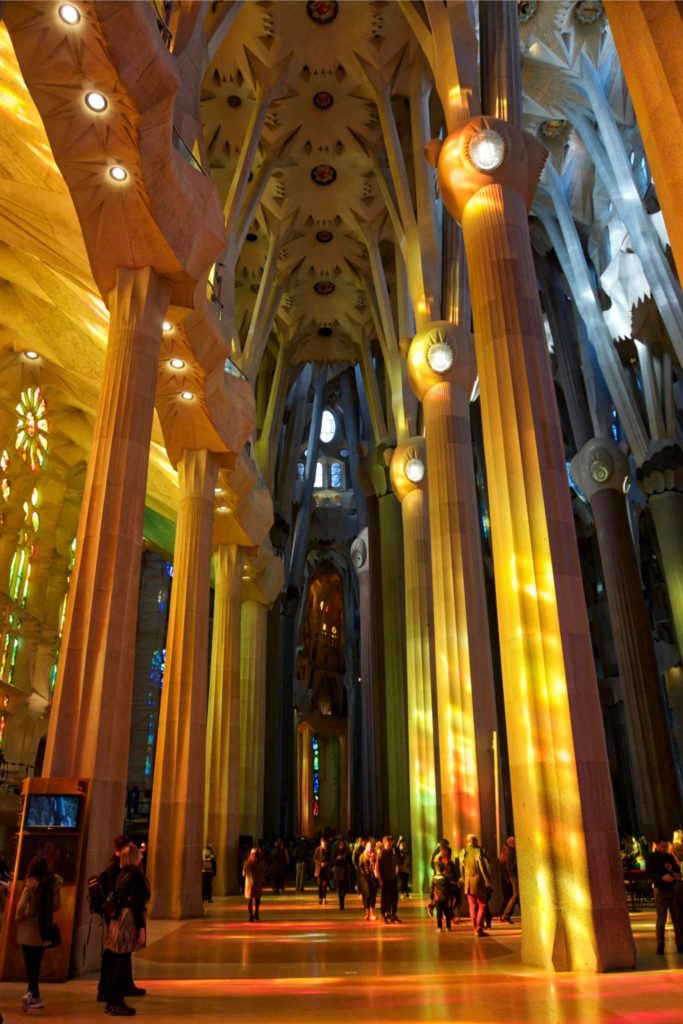
La Sagrada Familia, Barcelona,
The main structural work of the Sagrada Familia is scheduled to be completed this year, marking the 100th anniversary of architect Antoni Gaudí’s death. While this includes the completion of the central Tower of Jesus Christ, making it the world’s tallest church, decorative details and final sculptural work may continue until roughly 2034
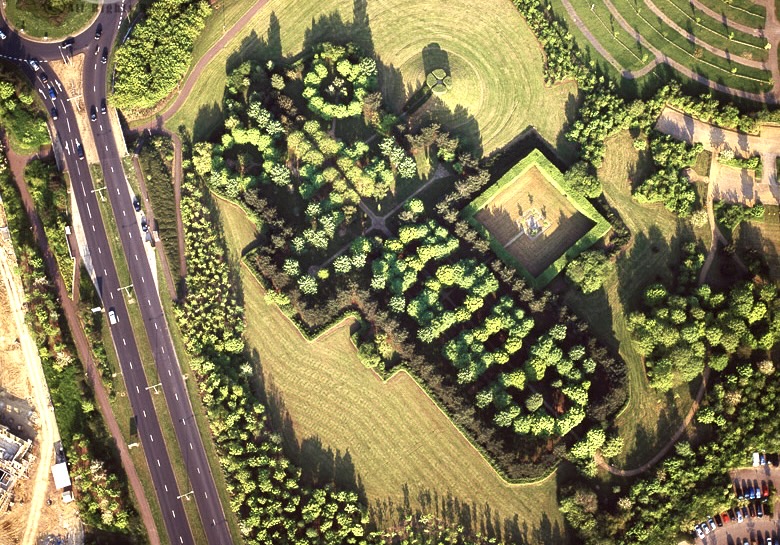
The Tree Cathedral in Milton Keynes, is a stunning, natural landscape feature designed in 1986 by Neil Higson, inspired by Norwich Cathedral. It features trees, hedges, and shrubs arranged to resemble a medieval cathedral’s nave, chapel, and spire, offering a tranquil space for walking, meditation, and events.
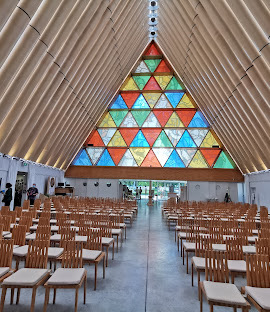
The Cardboard or Transitional Cathedral in Christchurch NZ was built to replace Christchurch Cathedral which was badly damaged in an earthquake in 2011. It was designed by the Japanese architect Shigeru Ban (sometimes known as “the disaster architect”), and it gets its nickname from the use of over 90 large cardboard tubes for its walls and roof.
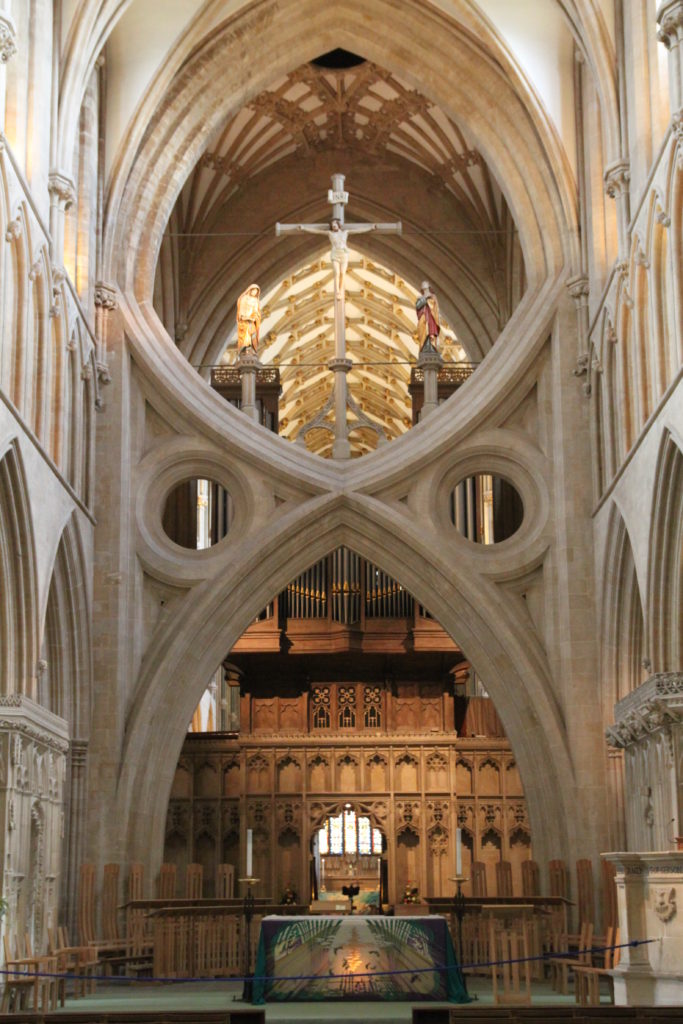
Wells Cathedral, Somerset, is most famous for its 3 spectacular scissor arches. These are unique 14th-century structural reinforcements designed by mason William Joy between 1338-1348. They were built to prevent the collapse of the central tower, which was sinking under its own weight, by creating a braced “scissor” shape to redistribute weight and stabilise the structure.
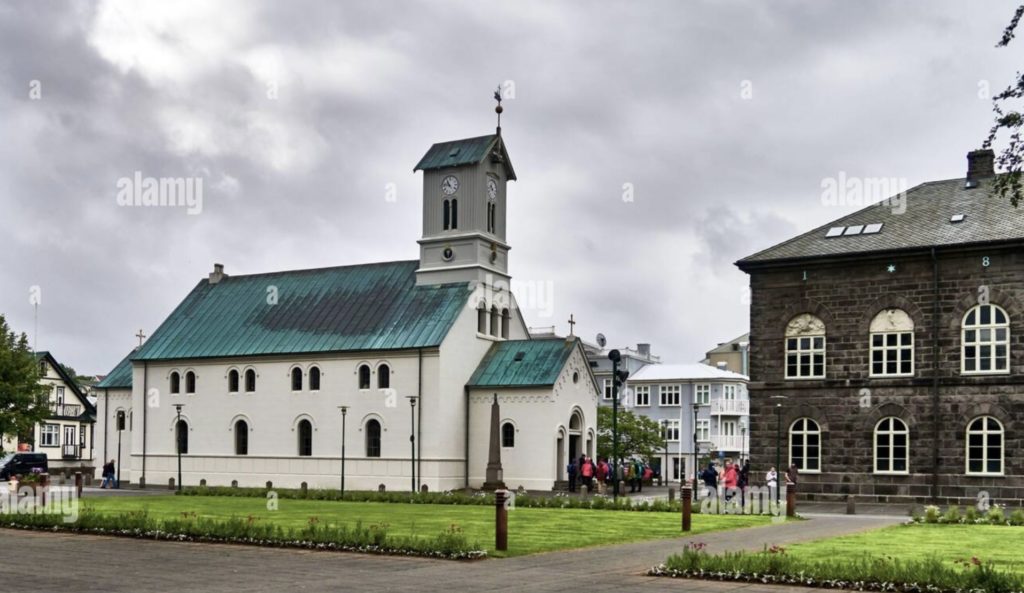
Reykjavík Cathedral is the seat of the Bishop of Iceland, as well as the Lutheran parish church of the old city centre. It is located next to the Parliament House symbolising an unbroken connection between the laws and traditions of the land. Since Iceland’s parliament was resurrected in 1845, each session of parliament has begun with a Mass at the cathedral, and from there the dean of the cathedral leads the members of parliament to the parliament house.
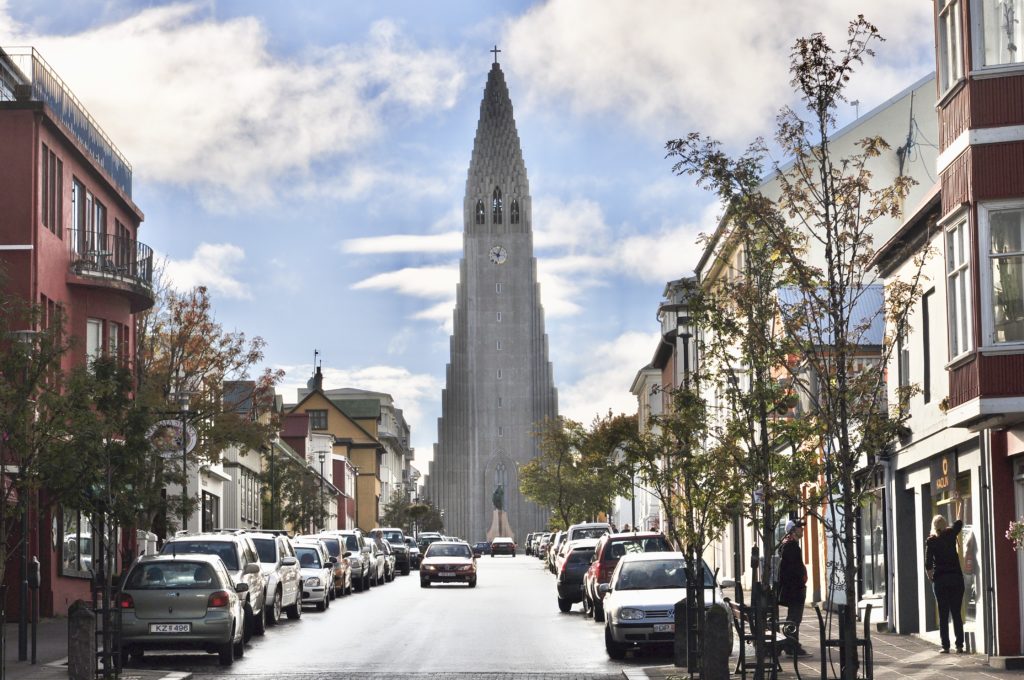
The perhaps better-known Hallgrimskirkja is actually a Lutheran parish church which is often mistaken for a cathedral due to the size of its huge basalt column design.
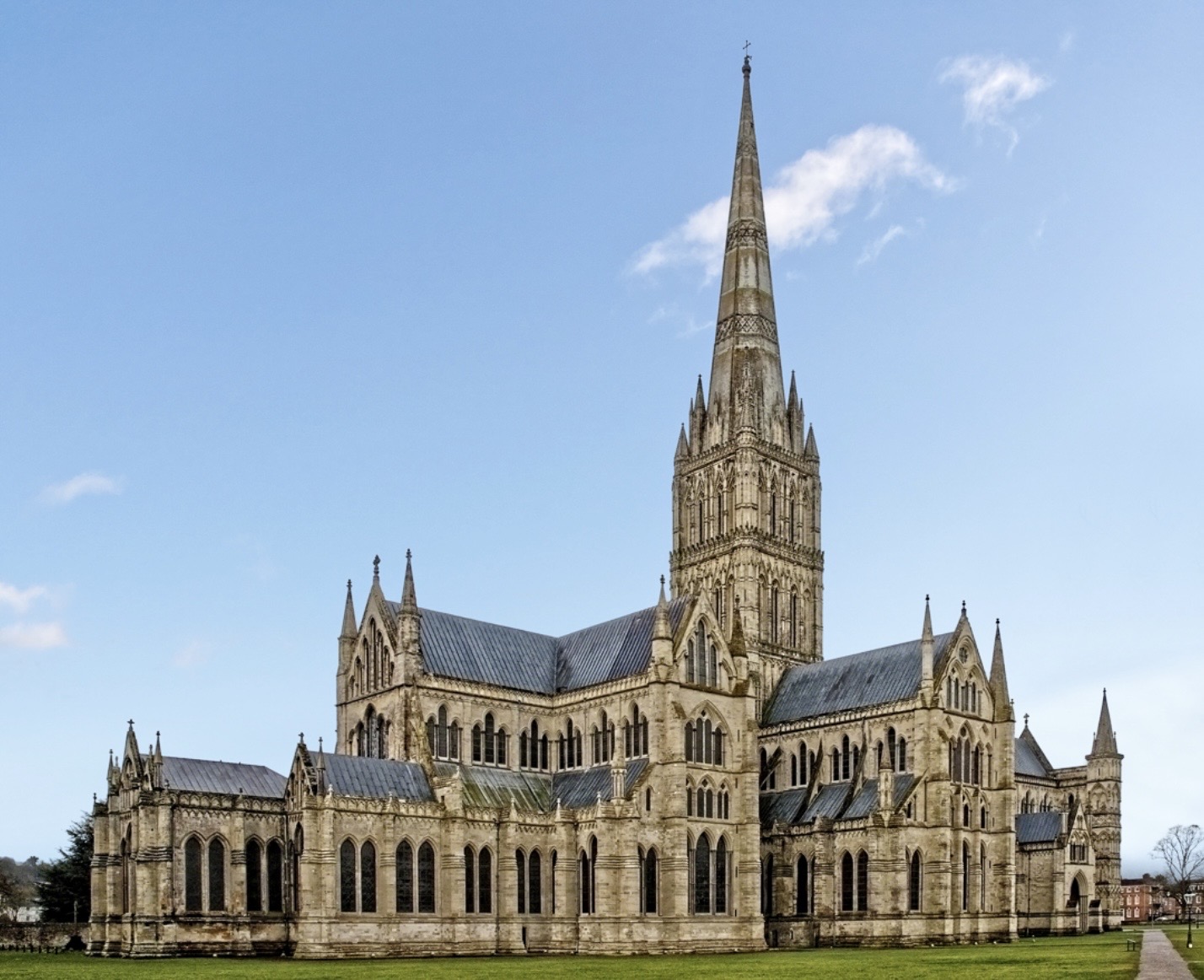
Salisbury Cathedral has the tallest spire in England and it was the inspiration for William Golding’s novel, The Spire. Legend has it that Bishop Richard Poore shot an arrow from Old Sarum (2 miles north of the present city);
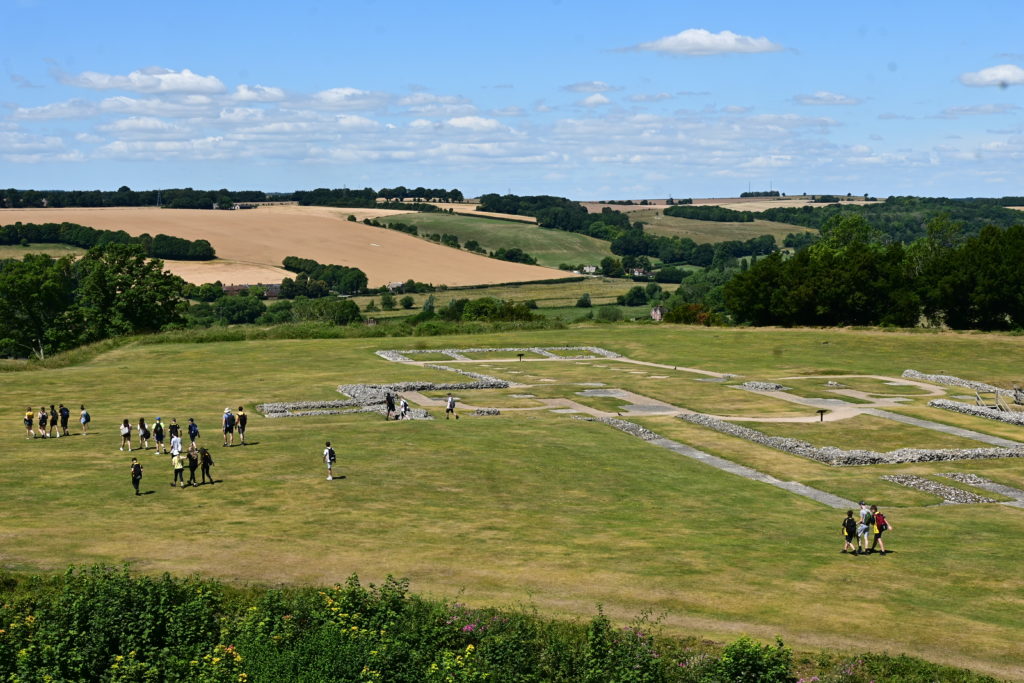
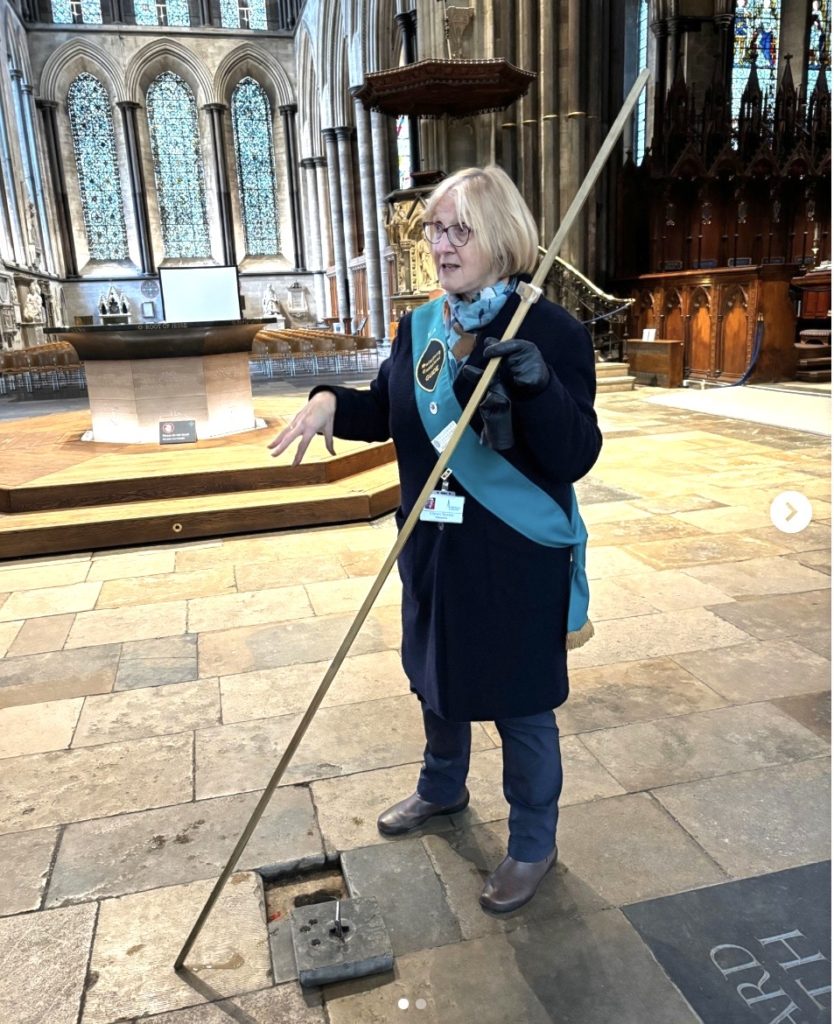
in the direction he would build the cathedral; the arrow hit a deer, which died in the place where the Cathedral is now. As a result of the high water table on the new site, the cathedral was built on foundations only 4 feet deep which is surprising given the size and weight of the building. The foundations are made of flint stone held together with lime mortar laid on top of gravel left by the nearby rivers. In 1915, the water came up through the foundations flooding the Cathedral. Cathedral staff check water levels under the cathedral floor—often near the spire—using a dipstick through a hidden floor tile, sometimes twice daily.
To manage the water from nearby rivers, a complex, historical sluice system exists to regulate the water level.
In the nave is the spectacular modern 10 feet wide font designed by water sculptor William Pye. The water overflows in each corner into bronze gratings in the floor and is then recycled.
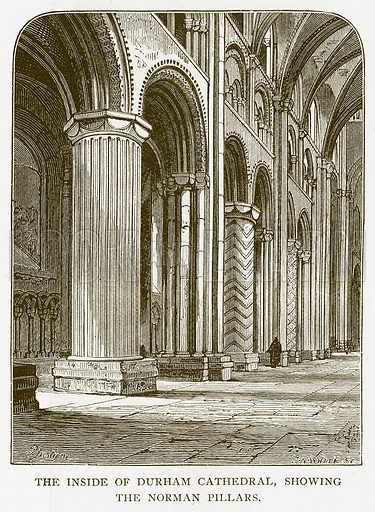
Durham Cathedral is a large Norman-style cathedral, famous for its massive stone arches, historic architecture, and as a UNESCO World Heritage Site. St Cuthbert of Lindisfarne is important to the cathedral as his shrine is kept there—making the cathedral a major place of pilgrimage in medieval England. Did you know the massive columns in the cathedral are hollow, probably filled with 920 year old rubble? Apparently the circumference of the each column is equal to its height.
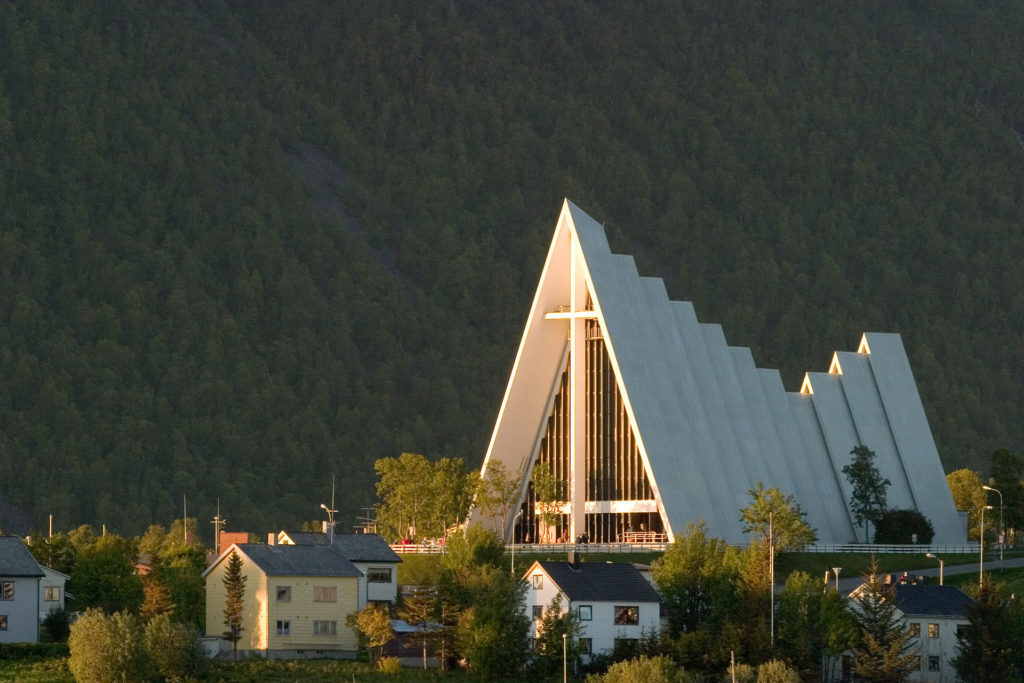
The Arctic Cathedral (actually a parish bchurch ) in Tromsø, Norway, is a striking Modernist landmark completed in 1965 by architect Jan Inge Hovig. Renowned for its triangular, glass-façade design resembling icebergs or tents, it features 11 aluminium-coated concrete roof panels and hosts concerts, including midnight sun performances.
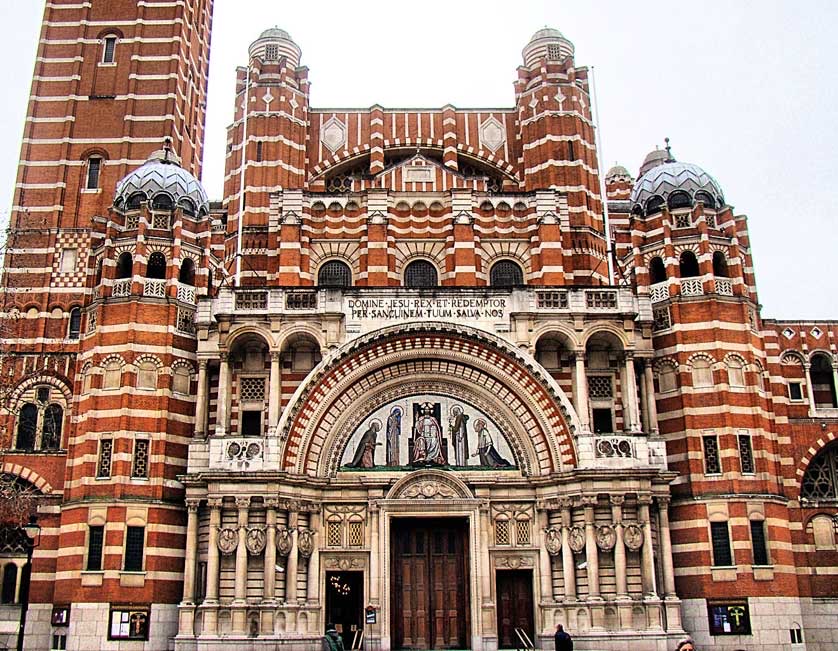
Westminster RC Cathedral is relatively modern in historical terms. Building only began in 1895 and the Cathedral was completed just eight years later in 1903. It was built of brick, a cheaper alternative to stone, to reflect the working background of Victorian Britain. Cardinal Vaughan oversaw its construction stating as one of his key requirements that it should not compete with the Gothic grandeur of neighbouring Westminster Abbey. The building was financed by wealthy donors such as the Duke and Duchess of Norfolk, Hilaire Belloc and GK Chesterton but on completion there was still some outstanding debt, which meant that the cathedral could not be consecrated until this was completely paid off in 1910.
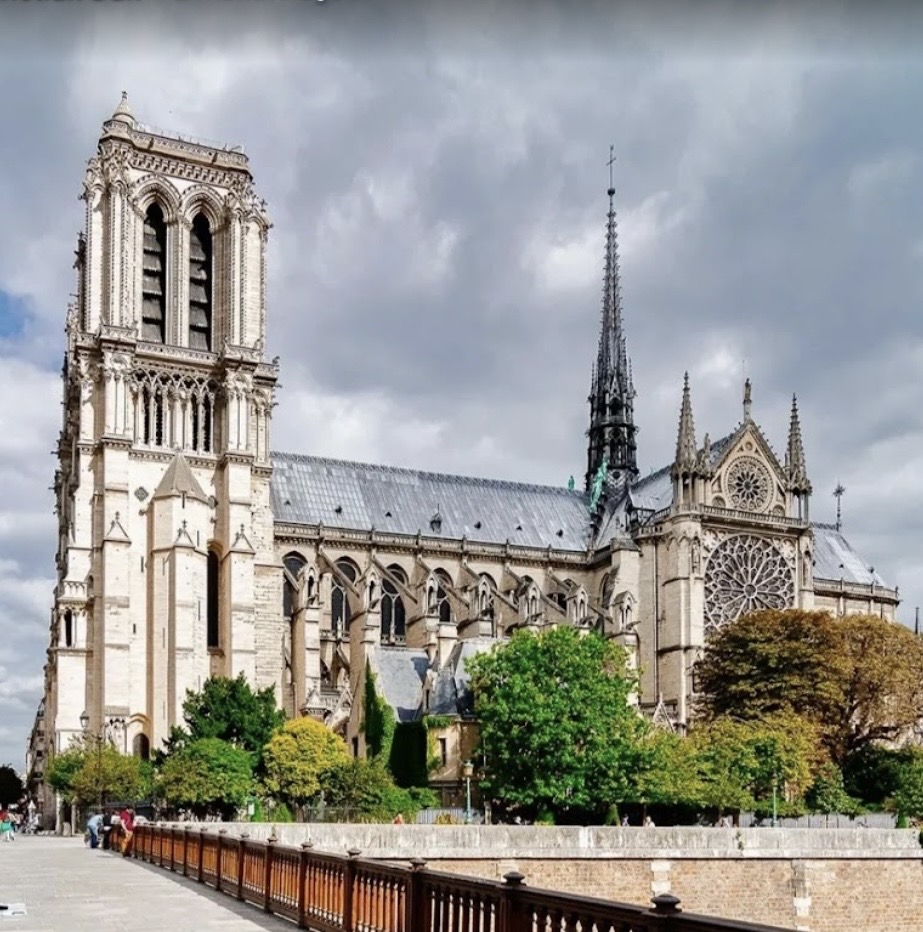
Notre Dame de Paris, the symbol of the city and the French Nation.
As we all know this famous cathedral of the Middle Ages was gutted by a devastating fire on the evening of 15 April 2019. President Macron vowed to rebuild Notre-Dame “more beautiful” within five years. The ambitious restoration project, treated as a national duty, garnered over €800 million in pledges within days, and true to that vow Notre Dame officially reopened on 7–8 December, 2024. Over 2000 workers and artisans worked on rebuilding the cathedral identically to its pre-fire state. Major works included initial stabilisation, rebuilding the oak roof structure using traditional techniques, reconstructing the 19thC spire and cleaning and restoring stone, artworks, and organ.
Click the link below to see a BBC News item about restoration