
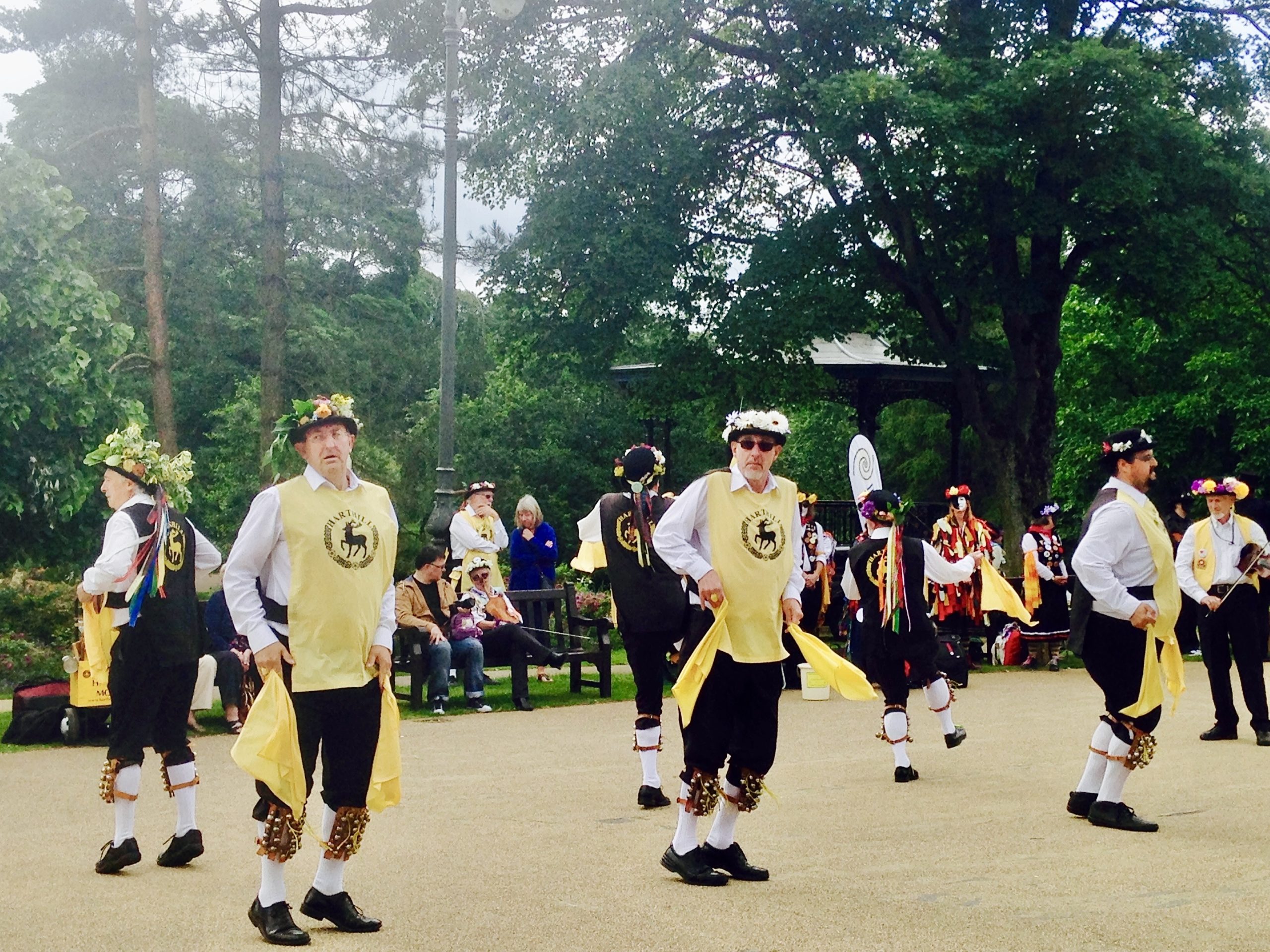

Morris dancing is a tradition rooted in English culture. ‘Sides’ or ‘teams’ perform ‘sets’, usually of six or eight dancers, and a ‘Bagman’ is the keeper of the bag ie funds and equipment . The ‘Squire’ usually leads whilst the ‘Foreman’ teaches the collection of dances. Most Morris dancers wear curious costumes – hats, shin pads, flowers, bells and tassel whilst waving hankies, clashing wooden staves and prancing to the music of a fiddle, melodeon, accordion, concertina or drums. Some sides are accompanied by a ‘Fool’ or a beast such as a hobby horse.
The name may have derived from ‘Moorish’ and may have arrived in Europe through the Moors of Spain. It probably had its beginnings in the 1400s in the royal courts of Europe with their love of masques and mummery. (Mummers’ plays have been revived in several English towns in recent years, but unlike the Morris dancers, the mummers stay still and use stylised gestures and rhyming couplets to tell a story, such as George and the Dragon. Their performances tend to take place in winter, particularly Boxing Day, whereas Morris dancing tends to be more of a summertime activity.)
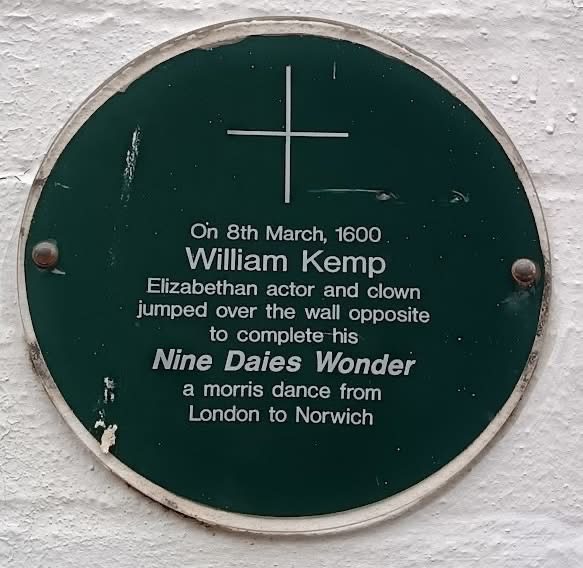
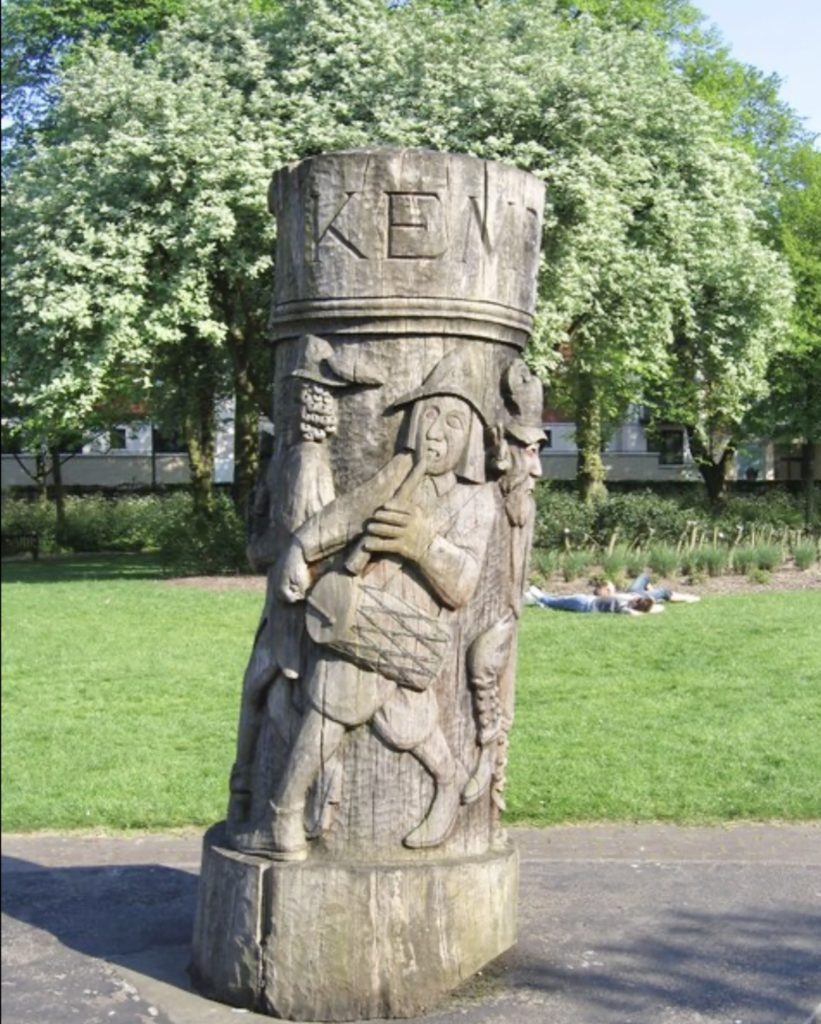
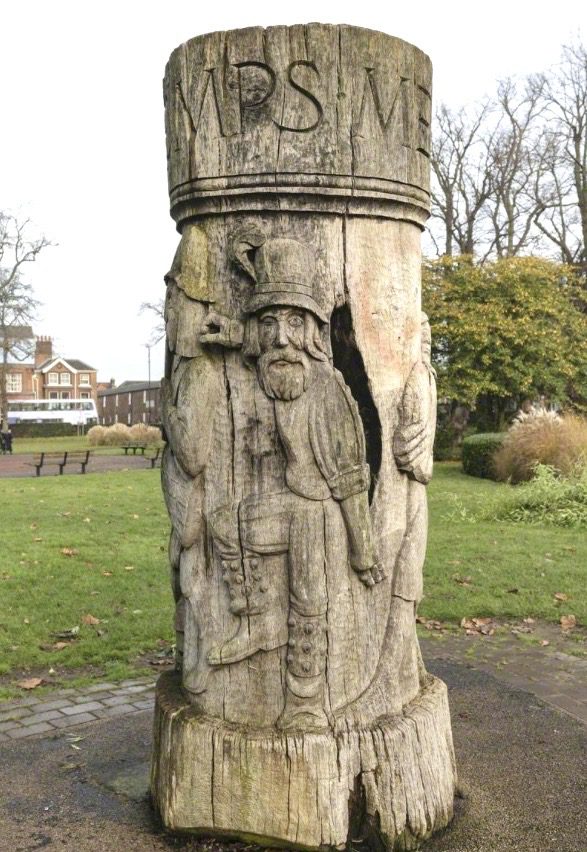
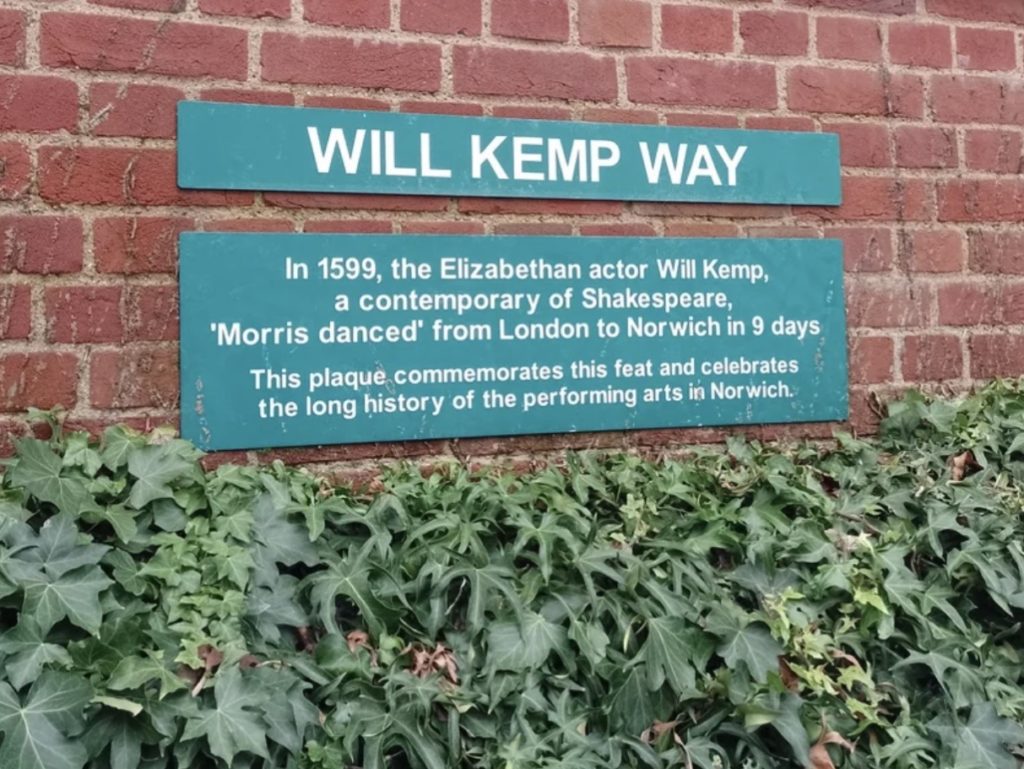
In 1600, Will Kemp, a famous Elizabethan stage actor, comedian, and dancer best known as one of the original comic actors in William Shakespeare’s company, the Lord Chamberlain’s Men, Morris danced 125 miles from London to Norwich. Kemp and Shakespeare were believed to have had a falling out due to Kemp’s ad libbing, hence “let those that play your clowns speak no more than is set down for them,” (from Hamlet) may be a reference to Kemp. Though it was only nine days of actual dancing, the entire journey took about 23 to 27 days because he took frequent rest breaks, feasted as an honoured guest, and entertained locals. On reaching his destination , Kemp donated his dancing shoes to the city of Norwich which were then fastened to the walls of the Guildhall. A local Morris dancing side named Kemp’s Men of Norwich was founded in 1956 to honour his historic trek and traditional local steps, and he is commemorated today in the city.
Under Oliver Cromwell ‘the Devil’s music’ this ‘heathenish and unlawful custom’ was stamped out because it ‘tendeth to draw together a great concourse of loose people and consequently to the hazard of the public peace beside other evil consequences.’
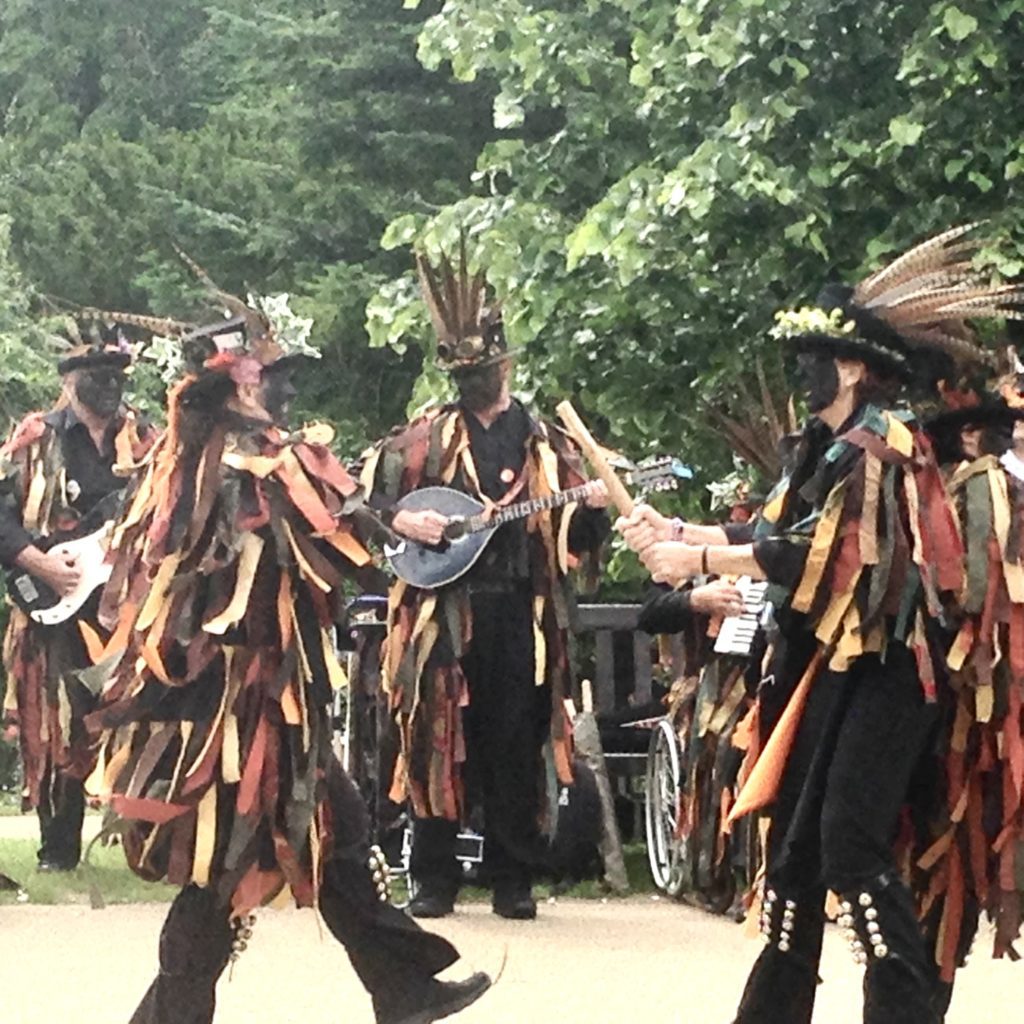
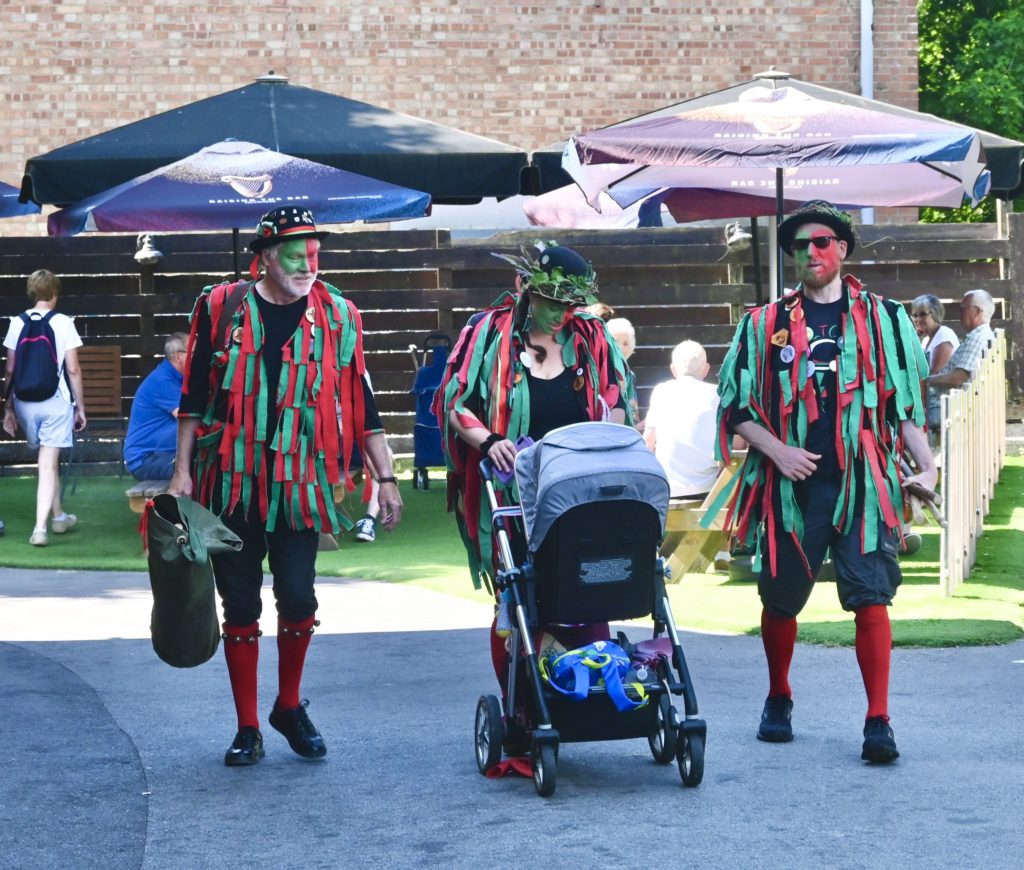
Morris dancing fell into decline and by the late 1800s was a fringe activity although a few sides such as Headington Quarry in Oxford claim an unbroken four century tradition. Its resurgence began when Cecil Sharp, the famous collector of folk music, began to give lectures on Morris dancing. Different regions developed different styles each having their own costume and quirks.
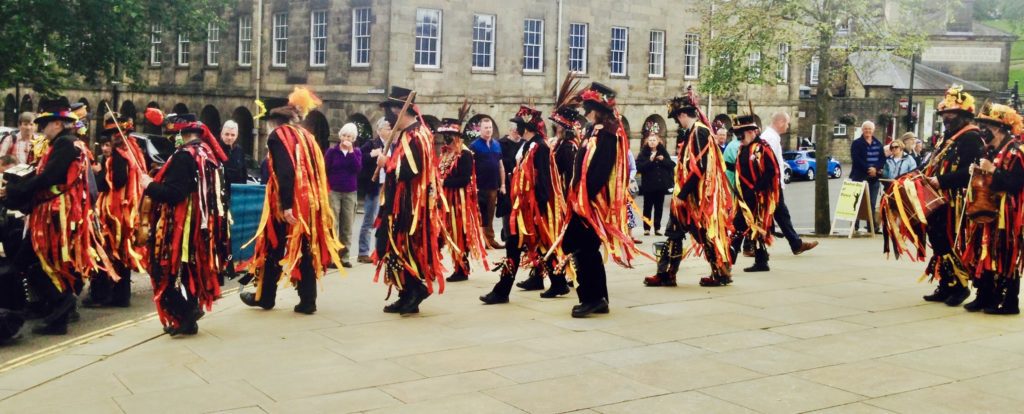
Locally, we have:
Broadwood Morris Men
Magog Morris
Horsham Black Dragon Morris
Mythago
In popular culture Terry Pratchet’s Discworld books have seen the invented Dark Morris Tradition brought to life in some form by genuine Morris sides. Dark Morris has been described as having been “evolved from the border revival of the 1970s which was part of a wider neo-traditionalist surge of interest in regional Morris styles”.
Mythago was formed in 1997 as a new, radically different ritual dance team for West Sussex.
It brings to life various seasonal customs such as Sussex Apple Howling and All Hallows Souling.
Web link. Mythago
And If you’re in Worcestershire and looking for an all-women’s Morris side
Nancy Butterfly Women’s Morris might be just up your street!
Web link. Nancy Butterfly Women’s Morris
