
The Evolution of Photography all started around 350BC with Aristotle and the camera obscura. He discovered that by passing sunlight through a pinhole, he could create a reversed image of the Sun on the ground. He used this device as a means for viewing an eclipse without having to stare directly into the Sun. In 1490 Leonardo Da Vinci was using the same device to trace images and by the 1700s it was in common use by Rembrandt, Caravaggio and Vermeer.
1724 Johann Heinrich Schalze discovered substances mixed with silver nitrate darkened in exposure to light through a lens but images faded soon after. Many of the chemicals in fact used in the development of photographs, were extremely dangerous and prolonged contact could lead to madness or even death.
In 1833 Louis Daguerre invented an early photographic process that produced a unique, direct-positive image on a silver-coated copper plate. This was the first commercially viable photographic method and it became most popular for portraits, especially after the French government declared it free to the world.
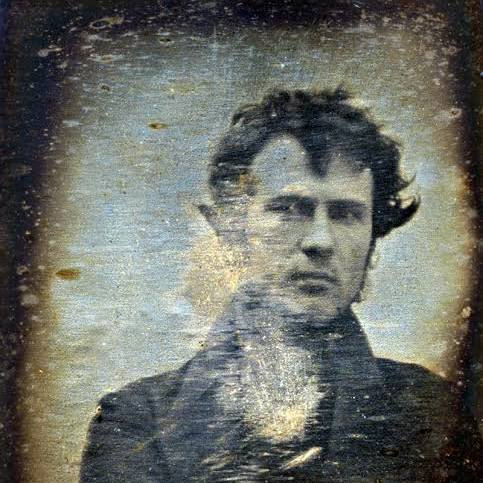
In 1839 what was probably the world’s first selfie was taken by Robert Cornelius.
From this time until the 1930s post-mortem photography became a common practice. This served as a way for grieving families to have a memento of a love one, particularly if no photo existed from their life.
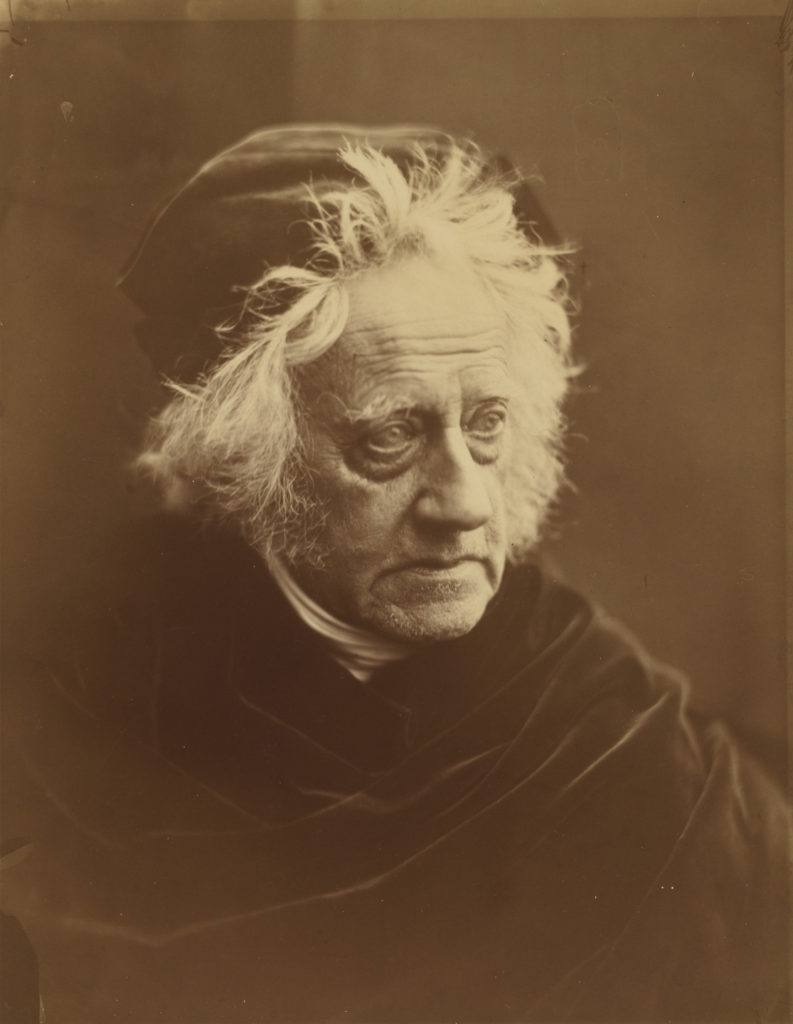
In 1839 Sir John Herschel coined the term Photography from the the Greek ‘photo’ meaning ‘light’ and ‘graph’ meaning ‘drawing’, and it was he who discovered a substance that could be used as a photographic fixer.
The photographer, Julia Margaret Cameron became a great friend of Herschel after they met in South Africa where sh- was convalescing and he was working. Whilst there she also met her husband-to be Charles Hay Cameron, and after their marriage, they named their first child, Henry Herschel Cameron, after his godfather. Like his mother, he too would grow up to be a photographer. Julia took up photography at the age of 48 after one of her daughters gave her a camera as a present. She quickly produced a large body of portraits and created allegorical images inspired by theatre and 15th C artists, taking around 900 photos over a period of 12 years. She has been credited with producing the first close-ups in the medium.
1840 Henry Fox Talbot invented a process based on negatives that allowed for copies to be made. A visit to The Fox Talbot Muséum at Lacock Abbey is highly recommended by several of our members to see the world-changing breakthroughs in photography invented by Fox Talbot. The Fox Talbot Museum
1850s Mobile photo studios became the rage because photos had to be developed on site. Exposure times were now about 3 minutes so photographers used neck braces and drugs to keep their subjects still.
1861 The world’s first photoshop! The head of Abraham Lincoln was placed on a more noble body!
1871 Smaller cameras were introduced eliminating the need for tripods.
The world’s first photo sequence was set up using 12 cameras with wire triggers on the path of a galloping horse to prove that a horse’s four hooves left the ground simultaneously.
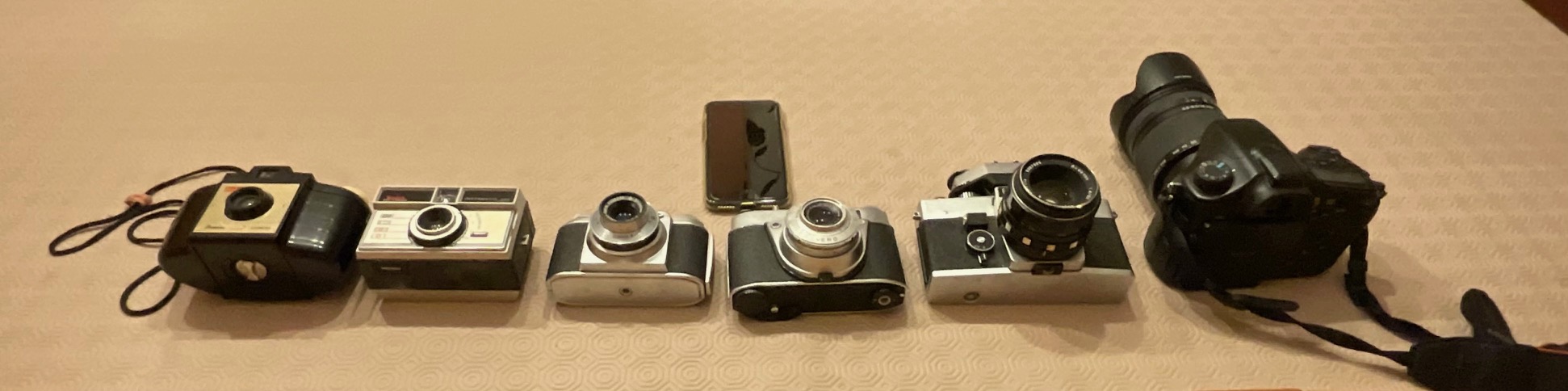
1888 The first hand-held camera by Kodak went on sale.
Early 1900s The Brownie camera introduced the concept of the snapshot.
Many companies have produced cameras over the last 100+ years including Nikon, Olympus, Canon, Sony and in 1925, Leica. In 2022 a Leica camera became the most expensive camera ever sold at auction. The price? 14 MILLION dollars!
In 1939 Semyon Kirlian gave his name to Kirlian Photography when he discovered that if an object on a photographic plate disconnected to a high voltage source an image is produced on the plate.
The first digital camera was invented in 1975 by Steve Sasson.
Kodak only switched to digital in 2004 believing they would never be really popular. They filed for bankruptcy in 2012!
The first mobile phone with a camera was a game changer in 2000 and now we have spectacles with a camera in one of the arms that will take a photo with just one tap, of something you can see in front of you.
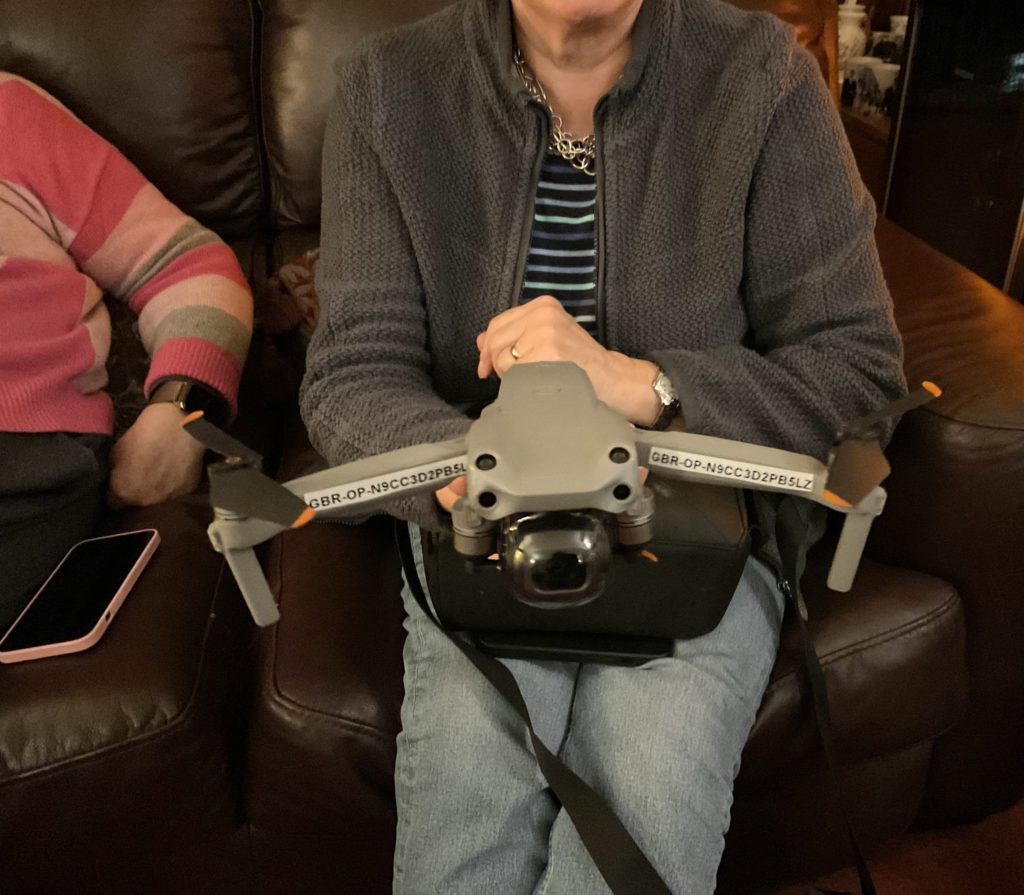
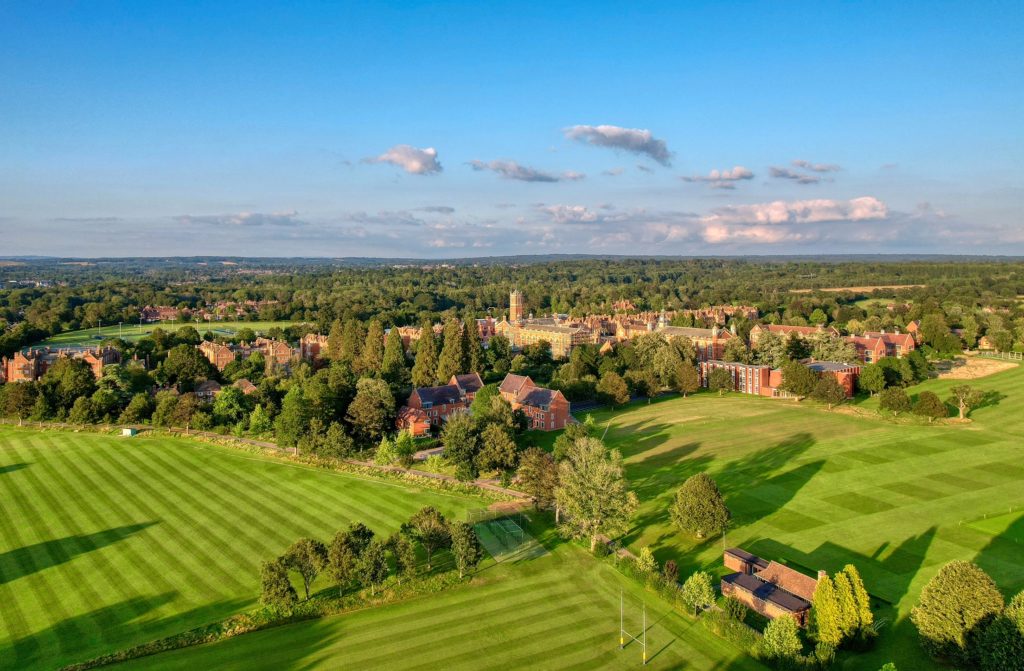
In Horsham we have a member who brought along a drone and some spectacular photos that had been taken using it.
What will be the next new development in photography I wonder?